
Loan Against a Cartier Watch or Jewelry: Collateral Terms and Approval Steps

A Cartier Love bracelet, a Panthère watch, or a set of high jewelry sitting in a safe can do more than sit there — it can become a source of fast, flexible liquidity without ever leaving your ownership. Borrowing against luxury assets has become a practical alternative to traditional loans for people who need cash quickly but don’t want to sell a piece they value.
Vasco Assets, a licensed and bonded luxury asset firm based in Newport Beach, structures exactly this kind of lending around Cartier and other high-end pieces. Understanding how collateral terms are set and what the approval process actually involves can help you decide whether this route fits your situation.
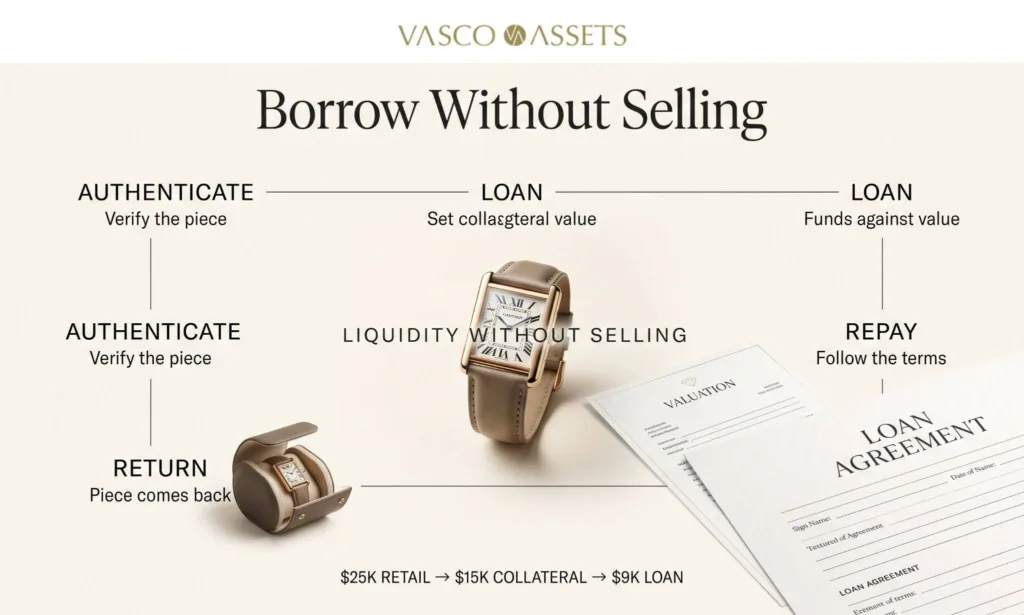
How a Collateral Loan Against Jewelry Works
The Basic Structure
A collateral loan against a Cartier watch or jewelry piece works differently from a traditional bank loan. Instead of your credit score determining approval, the lender secures the loan against the physical asset itself, holding it until the loan is repaid.
This means approval depends far more on the item’s verified value than on your credit history. It also means the lender assumes less risk, which is part of why collateral loans can move faster than conventional financing.
What Happens If You Don’t Repay
If you repay the loan according to the agreed terms, your Cartier piece is returned to you in the same condition it was received. If you don’t repay, the lender is generally entitled to sell the piece to recover the loan amount, similar to how a mortgage lender can foreclose on unpaid property.
Understanding this trade-off upfront is essential. A collateral loan gives you liquidity without selling, but only if you’re confident you can meet the repayment terms you agree to.
How Cartier Pieces Are Valued for Collateral
Authentication Comes First
Before any loan amount is discussed, a specialized lender authenticates the piece. For Cartier watches, this includes verifying serial numbers, movement details, and case construction against known reference data. For jewelry, it means confirming metal purity, gemstone quality, and any Cartier hallmarks or signatures.
Condition, Documentation, and Market Demand
Once authenticity is confirmed, the lender assesses condition, completeness, and documentation. A watch with its original box, papers, and service history typically supports a stronger loan offer than one without, since documentation reduces the lender’s risk.
Current market demand for the specific model also factors in. A Cartier reference in high demand, such as a well-known Tank or Santos model, generally supports a stronger offer than a less sought-after piece.
Market Value Is Not the Same as Collateral Value
Why a Piece Has Several Numbers, Not One
A Cartier piece can have several different values at the same time, and the number that matters for a collateral loan is not necessarily its retail or secondary-market price. A useful way to understand the process is a chain: retail value, then secondary-market value, then liquid resale value, then collateral value, then the actual loan amount.
For example, suppose a Cartier watch has a hypothetical current retail or replacement value of $25,000. Comparable pieces might trade for around $19,000 on the secondary market, and if the lender estimates it could realistically liquidate the watch for $17,000, it may assign a lower collateral value of $15,000 after accounting for resale risk, then offer a $9,000 loan.
| Valuation stage | Illustrative amount |
| Retail/replacement value | $25,000 |
| Secondary-market value | $19,000 |
| Estimated liquid resale value | $17,000 |
| Collateral value | $15,000 |
| Loan offered | $9,000 |
These figures are illustrative only, not Cartier market averages. The pattern matters more than the specific numbers.
Why Lenders Work From Collateral Value, Not Retail Price
This distinction matters because lenders need to consider how much they could reasonably recover from the asset, not simply what the piece costs new. The CFPB describes the loan-to-value ratio as a measure comparing the amount being financed against the appraised value of the asset securing the loan.
In the example above, the $9,000 loan represents 60% of the $15,000 collateral value, not 36% of the $25,000 retail figure. Before accepting any offer, ask which valuation the lender is using as the LTV denominator and how that figure was determined.
Interest Rates, Terms, and Fees to Understand
Interest Structure
Collateral loans against luxury assets typically carry interest rates that reflect the reduced risk to the lender, since the loan is fully secured. Rates and structures vary by lender, so ask whether interest accrues monthly, how it compounds, and whether early repayment reduces the total owed.
Storage, Insurance, and Redemption Deadlines
Beyond interest, ask about any storage or insurance fees charged while your piece is held as collateral. A reputable lender should insure your Cartier piece for its full value during the loan period and be transparent about who bears that cost.
Every collateral loan also includes a redemption deadline — the date by which you must repay to reclaim your piece. Understand what happens if you need more time, including whether extensions are available and what they cost, before you sign anything.
Step-by-Step: The Approval Process
Submitting Your Piece for Review
The process typically begins with submitting photos and details of your Cartier watch or jewelry, either online or in person, so the lender can provide a preliminary estimate of loan value.
Authentication and Appraisal
Next, the piece is physically authenticated and appraised by a specialist, confirming the details that determine both the collateral value and the final offer amount.
Reviewing and Signing Terms
Once the appraisal is complete, you’ll receive a formal loan offer outlining the amount, interest rate, term length, and any fees. Read this agreement carefully before signing, since it defines your rights and obligations for the full loan period.
Receiving Funds and Repayment
After signing, funds are typically disbursed quickly, often within the same day for firms specializing in this kind of lending. You then repay according to the agreed schedule to reclaim your piece before the redemption deadline.
How Vasco Assets Structures Collateral Loans
Vasco Assets offers Collateral Loans built specifically around high-end assets like Cartier watches and fine jewelry, drawing on a team the company describes as having over 150 years of combined experience in luxury buying. This specialization matters directly for loan terms, since accurate authentication and valuation typically translate into stronger offers than a generalist lender can provide.
For sellers who aren’t local to Newport Beach, Sure Secure Shipping makes it possible to submit a piece for appraisal and loan approval without an in-person visit. If you later decide selling makes more sense than borrowing, Sell Your Assets provides a separate path to a guaranteed best-price valuation.
What to Ask Before You Borrow Against Your Cartier Piece
Before committing to any collateral loan, ask directly how your piece will be stored and insured during the loan term. Confirm the exact interest structure, whether extensions are available near the redemption deadline, and what happens if you’re unable to repay in full.
It’s also worth asking how the lender determined your specific collateral value and loan-to-value ratio, since a transparent lender should be able to explain the reasoning rather than simply stating a number. Clear answers upfront prevent unpleasant surprises later in the loan term.
Putting Your Cartier Piece to Work Without Losing It
Borrowing against a Cartier watch or jewelry piece can be a smart way to access liquidity while keeping ownership, but the terms you agree to matter as much as the loan amount itself. Authentication quality, collateral valuation, interest structure, and redemption terms together determine whether a collateral loan actually serves your needs.
If you’re considering this route, Vasco Assets offers collateral lending built specifically around luxury pieces like Cartier watches and jewelry. Request a free valuation to see what your piece could support before committing to any loan terms.
Frequently Asked Questions
How much can I borrow against a Cartier watch or jewelry piece?
The amount depends on the item’s collateral value, not its retail price, and the lender’s loan-to-value ratio applied to that figure. Highly sought-after Cartier models generally support stronger offers.
Will I lose ownership of my Cartier piece if I take out a collateral loan?
No, as long as you repay according to the agreed terms. The lender holds the piece as security during the loan period and returns it once the loan is repaid.
What happens if I can’t repay the loan on time?
Terms vary by lender, but many offer extensions for a fee before resorting to selling the piece to recover the loan amount. Always clarify this process before signing any agreement.
Why is my loan offer lower than my watch’s retail value?
Lenders base offers on collateral value, which accounts for resale risk and liquidity, not the original retail or replacement price. This protects the lender if the piece needs to be resold.
Do I need the original box and papers to get a loan against my Cartier watch?
Not necessarily, but having documentation typically supports a stronger loan offer since it reduces the lender’s risk and confirms authenticity more easily.
How quickly can I receive funds after approval?
Specialized luxury lenders often disburse funds quickly, sometimes within the same day the loan agreement is signed, though timing can vary by lender.
Can I get a collateral loan without visiting Orange County in person?
Yes. Firms like Vasco Assets offer secure, insured shipping so you can submit your piece for appraisal and loan approval remotely.