
Pawn Shops That Buy High-End Watches vs. a Luxury Watch Buyer: What Differs
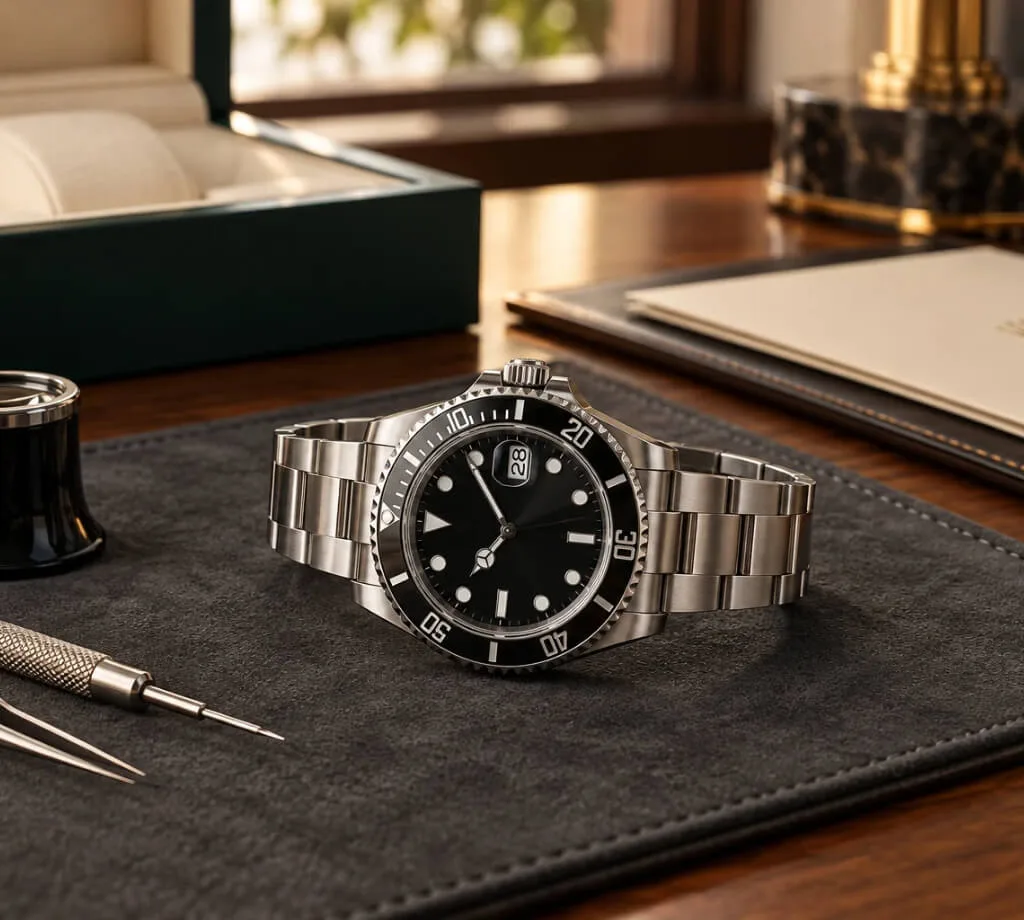
You have a high-end watch sitting in a drawer, and you’re finally ready to turn it into cash. The first search result that pops up is probably a pawn shop down the street, but is that really where a Rolex, Patek Philippe, or Audemars Piguet belongs? Pawn shops and dedicated luxury watch buyers may both offer you money for your timepiece, but the process, expertise, and final number you walk away with can differ dramatically.
Vasco Assets, a multinational conglomerate specializing in luxury asset financing and trading, exists precisely because that difference matters. Understanding how a general pawn shop operates versus how a specialized luxury buyer works can mean the difference between a fair, well-informed offer and a rushed, undervalued transaction you regret later.
What a Pawn Shop Actually Does
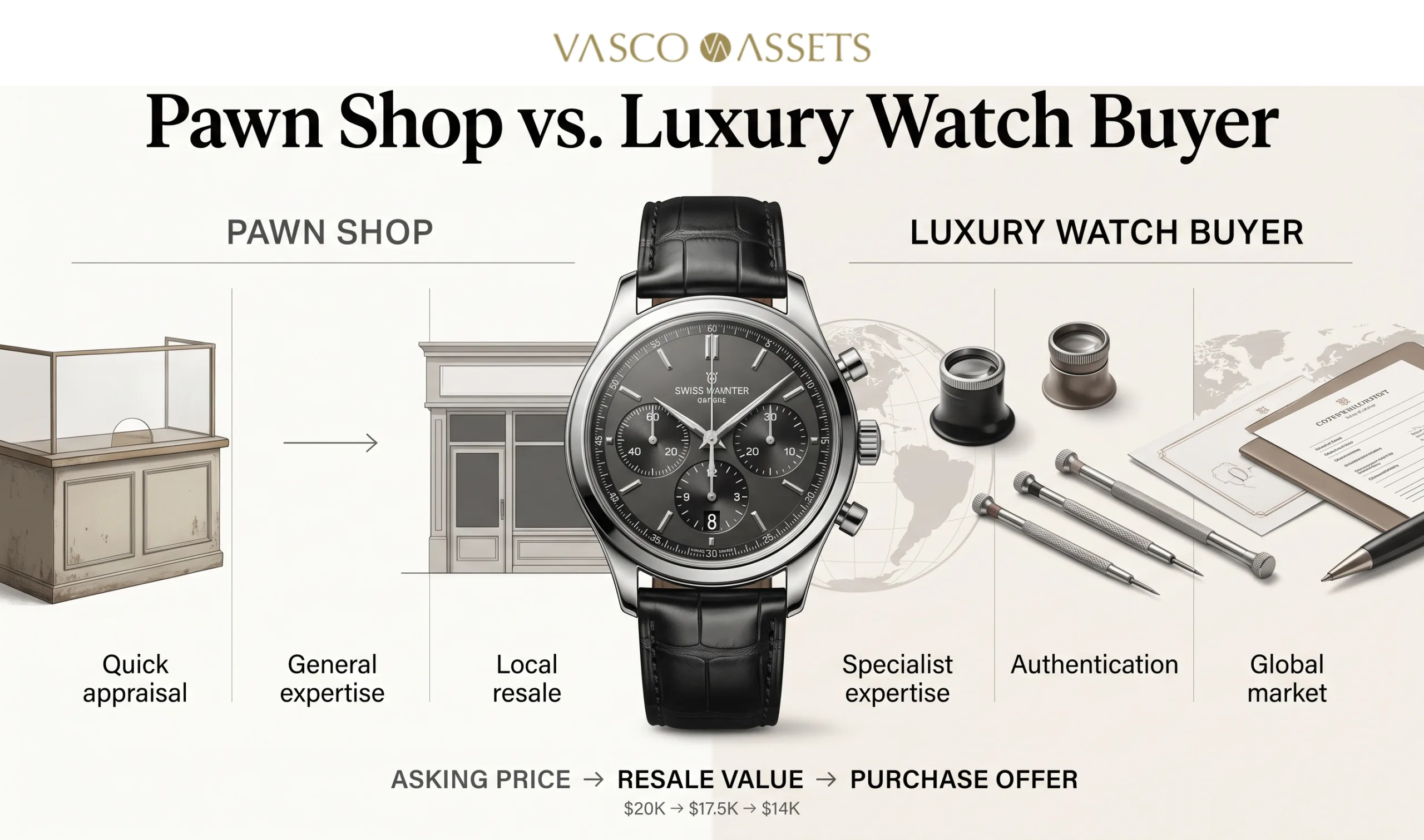
Pawn shops are built around short-term collateral loans, not specialized luxury resale. A staff member — often trained broadly across electronics, tools, jewelry, and firearms — gives your watch a quick once-over and hands you an offer based on general knowledge rather than deep horological expertise. Because pawn shops need to move inventory quickly and protect themselves against risk, offers tend to be conservative and heavily discounted from the start.
Most pawn shops also lack the authentication tools and market data required to distinguish a genuine Patek Philippe from a convincing counterfeit, or a discontinued reference from a common one. That uncertainty gets priced directly into your offer, whether your watch deserves it or not. You’re essentially paying for the shop’s lack of specialization, even if your watch is exceptionally rare, well-documented, or in mint condition.
How a Dedicated Luxury Watch Buyer Operates
A specialized luxury buyer approaches your watch as an asset with a defined global market, not just merchandise sitting on a shelf. Firms like Vasco Assets employ teams with deep category expertise, drawing on what the company describes as over 150 years of combined experience in luxury buying. That experience translates into accurate authentication, correct reference identification, and pricing informed by real-time international demand rather than local guesswork.
Because luxury buyers operate on a global scale, they aren’t limited to local resale value the way a neighborhood pawn shop is. Vasco Assets serves clients internationally, which means your watch’s worth is measured against a worldwide buyer network rather than the foot traffic of a single storefront. This broader lens typically produces stronger, more accurate offers, and it also means your watch is more likely to end up with a buyer who actually wants it.
How a $20,000 Watch Can Become a Much Smaller Cash Offer
A luxury watch does not have one universal “value.” The number you see online may be an asking price, while a dealer’s purchase offer reflects what that dealer expects to realize after acquiring, authenticating, servicing, holding, and reselling the watch. Chrono24 notes that its market-value estimates are based on comparable listings and that actual selling prices are not guaranteed; it also identifies condition, originality, complications, and box and papers as factors that can change value significantly.
The valuation chain is therefore better understood as expected resale price, minus authentication or repair risk, minus holding and operating costs, minus required margin, which together equal the purchase offer. For example, suppose comparable watches are listed around $20,000. A buyer might determine that the realistic resale value for your specific watch is $17,500 after accounting for its condition and market demand. If the buyer then needs $3,500 to cover risk, costs, and margin, the resulting purchase offer could land closer to $14,000.
| Valuation point | Illustrative amount |
| Comparable asking prices | $20,000 |
| Expected resale price | $17,500 |
| Risk, costs & margin | −$3,500 |
| Illustrative purchase offer | $14,000 |
These figures are hypothetical, not industry-standard percentages, but the pattern holds across most selling channels. Asking price does not equal dealer buy price, which does not equal pawn offer, which does not equal auction net proceeds after commissions and fees. For a seller, the useful question isn’t simply “what is my watch worth,” but “what price can I actually realize, through which channel, and what will I net after the transaction is complete.”
The Authentication and Trust Gap
Authentication is where the two models diverge most sharply. Pawn shops rarely have in-house watchmakers or certified appraisers, so their evaluation is often visual and surface-level, relying on general staff judgment rather than brand-specific expertise. That gap matters enormously with luxury watches, where subtle details in movement, engraving, and finishing separate a genuine piece from a well-made replica.
A luxury asset firm, by contrast, builds its reputation on precision — every watch is assessed against brand-specific details like movement, serial numbers, and documentation before a price is set. This precision protects both parties: you avoid being lowballed because a legitimate piece was mistaken for a fake, and the buyer avoids overpaying for something misrepresented. It’s a system built on transparency rather than guesswork, which is part of why specialized buyers can back their offers with confidence instead of hedging against uncertainty at every turn.
Documentation, Provenance, and Long-Term Value
Box, papers, service records, and original purchase receipts can meaningfully change what a watch is worth, yet many sellers don’t realize how much weight this documentation carries. A pawn shop transaction rarely accounts for provenance in a structured way, since staff are typically not trained to evaluate how paperwork affects resale value in international markets.
Specialized buyers, on the other hand, actively factor documentation into their offers because they understand how it affects the watch’s next sale. A complete set of papers can reduce a buyer’s perceived risk, which in turn can translate into a stronger offer for you. Keeping your original box, warranty card, and service history isn’t just good practice for insurance purposes — it’s a direct lever on the price you’ll be offered when you decide to sell.
Speed, Convenience, and the Real Cost of “Fast Cash”
Pawn shops market speed as their biggest advantage — walk in, walk out with cash in minutes. But that convenience is usually funded by a steep discount off your watch’s true value, since the shop is pricing in both its lack of expertise and its need to resell quickly. If you’re not careful, “fast” quietly becomes synonymous with “far below market.”
Luxury buyers have worked to close that convenience gap without sacrificing valuation accuracy. Vasco Assets offers secure shipping and online assessment forms so you can start the process from home, then receive an in-person, guaranteed valuation once your piece is reviewed. You get a specialist’s pricing without needing to compromise on turnaround time or settle for a rushed, uninformed number.
Why Specialization Pays Off
When you sell through a general pawn shop, you’re trusting a generalist to price a specialist’s item — and that mismatch almost always favors the buyer, not you. Choosing a firm built specifically around luxury assets changes the entire equation in your favor, from the accuracy of the appraisal to the strength of the final offer.
Vasco Assets is a licensed and bonded investment firm based in Newport Beach, California, with a portfolio spanning luxury watches, precious metals, diamonds, designer jewelry, coins, and exotic vehicles. If you’d rather sell outright, the company’s Sell Your Assets service provides a guaranteed best-price valuation. If you need liquidity but want to keep your watch long-term, Collateral Loans let you borrow against its value instead of parting with it. And for those exploring consignment, Consignment Services connect your piece with a wider network of qualified buyers who understand what it’s actually worth.
The Bottom Line for Your Watch’s True Worth
The difference between a pawn shop and a luxury watch buyer isn’t just about price — it’s about expertise, trust, and access to the right market for a genuinely valuable asset. A pawn shop treats your watch like generic collateral; Vasco Assets treats it like what it actually is: a piece with real, documentable, and internationally recognized worth.
If you’re ready to find out what your high-end watch is truly worth, skip the guesswork of a pawn counter. Request a free valuation from Vasco Assets and let a team with genuine luxury expertise give you an offer that reflects your watch’s real value.
Frequently Asked Questions
Is it better to sell a luxury watch to a pawn shop or a specialized buyer?
A specialized buyer is almost always the stronger option for high-end watches. Pawn shops price conservatively due to limited expertise and resale risk, while a dedicated luxury buyer has the market knowledge and global reach to offer closer to true value.
Why is a dealer’s cash offer often lower than the price I see listed online?
Listed prices are usually asking prices, not guaranteed sale prices. A dealer’s offer subtracts expected resale risk, holding and operating costs, and required margin, which is why a $20,000-listed watch might realistically fetch a noticeably lower purchase offer.
Will a pawn shop give me a fair price for a Rolex or Patek Philippe?
You can get an offer, but it’s unlikely to reflect the watch’s actual market value. Pawn shops generally lack the specialized authentication and global pricing data that luxury-focused buyers use to assess rare or high-value pieces accurately.
How does a luxury asset firm verify my watch is authentic?
Specialized buyers use category expertise to examine movement, serial numbers, materials, and documentation before making an offer. This detailed process protects you from being underpaid due to lingering authenticity doubts.
Do I need to bring my watch in person to get an accurate offer?
Not necessarily. Firms like Vasco Assets offer secure shipping and online valuation forms, so you can begin the process remotely and receive an in-person guaranteed offer once the piece is reviewed in detail.
Can I borrow money against my watch instead of selling it?
Yes. Collateral lending lets you access cash while retaining ownership of your watch, which is useful if you need liquidity but aren’t ready to part with the piece permanently.
How do I start the process of selling my luxury watch?
You can fill out an online assessment form to receive an initial estimate, then move forward with an in-person or shipped evaluation for a guaranteed final offer. Reaching out through a firm’s contact page is usually the fastest way to begin.