
Sell a Diamond Ring in Irvine: GIA-Certified Diamond Appraisal
Irvine’s diamond and jewelry buyers vary wildly in expertise, and “GIA-certified” gets used loosely enough that it’s worth understanding what the phrase should actually mean before you trust it. A diamond ring deserves an appraisal grounded in real gemological training, not a marketing label attached to a generalist buyer.
Vasco Assets, a licensed and bonded luxury asset firm serving Irvine and greater Orange County from Newport Beach, structures its diamond evaluations around genuine GIA-based expertise. Understanding what that actually involves can help you separate a credible appraisal from a convenient claim.
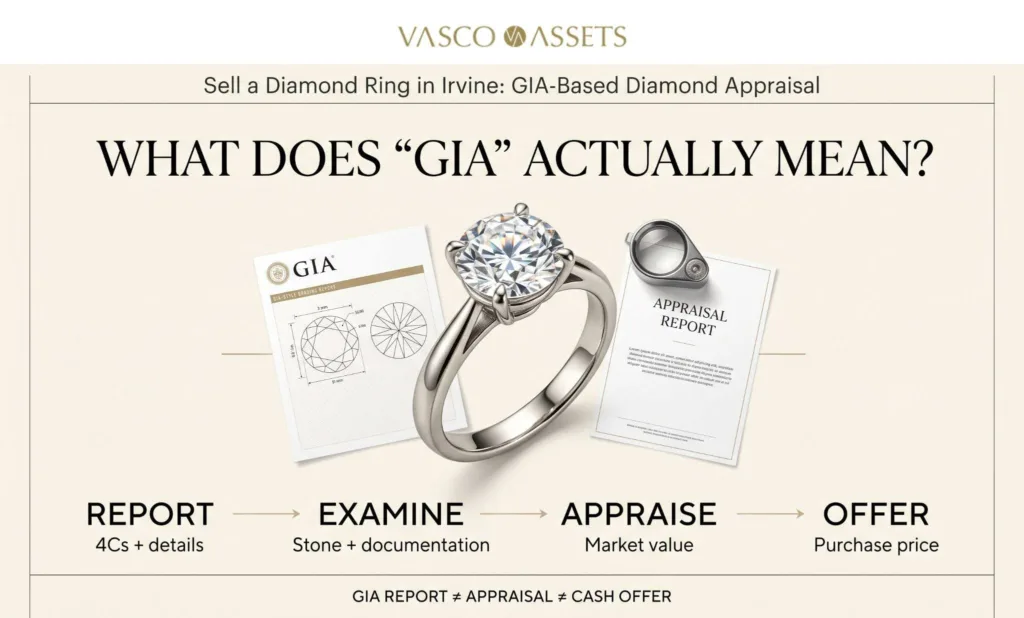
What Does “GIA-Certified” Actually Mean?
GIA Doesn’t Actually “Certify” Anything
“GIA-certified” is a phrase worth questioning when you’re selling a diamond. The Gemological Institute of America states plainly that it does not certify people, businesses, diamonds, or appraisals — it issues grading and identification reports, and specifically says that calling someone a “GIA Certified Diamond Appraiser” or a diamond “GIA Certified” is incorrect.
The Report, the Education, and the Appraisal Are Different Things
That distinction matters because several different things can get confused under one label. A GIA Diamond Grading Report documents characteristics like a diamond’s color, clarity, cut, carat weight, and measurements, but it does not assign a dollar value.
A person can also hold GIA education or a diploma, such as the Graduate Gemologist (GG) credential. GIA explains that it provides gemological education, while professional appraisers may use that training alongside additional appraisal education and professional qualifications.
What an Appraiser Actually Does
An appraiser performs a separate function entirely: evaluating the jewelry and assigning a monetary value for a stated purpose. GIA describes an appraisal as a description and valuation based on the appraiser’s own research and experience, not a service GIA itself performs.
The Better Question to Ask
For sellers, the practical question isn’t simply “are you GIA-certified?” Ask instead what GIA education or credential the evaluator actually holds, what the appraisal measures, and whether the number you’re given is an appraisal value or an actual purchase offer — that gives you far more useful information than a vague certification claim.
How a GIA Report Differs From an Appraisal
What the Report Documents
A GIA grading report documents a diamond’s 4Cs, measurements, proportions, and any known treatments, giving you an objective record of the stone’s identity and quality. It’s produced by an independent lab with no financial stake in your eventual sale price.
What the Report Doesn’t Tell You
The report does not assign a dollar value to your diamond. That step — turning documented characteristics into an actual number — requires a separate appraisal or, for selling purposes, a specific buyer’s purchase offer based on current market conditions.
From Grading Report to Purchase Offer
Starting With What’s Already Documented
If you already have a GIA report, a specialist appraiser starts by verifying the stone against it, confirming the report matches the physical diamond in front of them. This step is faster and more precise than grading a stone with no prior documentation.
Layering in Market Evidence
From there, the appraiser weighs your diamond’s specific combination of characteristics against current market evidence — what comparable stones with similar grades are actually selling for right now. Two diamonds with identical carat weight can still command different offers based on cut quality and clarity nuances.
Reaching the Final Number
The resulting purchase offer accounts for the buyer’s resale strategy, transaction costs, and risk, which is why it differs from both the GIA report and any prior insurance appraisal you may have. A transparent buyer walks you through each of these layers rather than presenting a single number without context.
The 4Cs and What They Mean for Your Offer
Cut: The Most Visually Significant Factor
Cut quality determines how well a diamond reflects and refracts light, and it’s often the single biggest driver of a stone’s visual appeal. A diamond with strong color and clarity grades can still look underwhelming if the cut is poor.
Color and Clarity Working Together
Color grades measure how close to colorless a diamond is, while clarity grades assess internal and surface characteristics visible under magnification. Buyers weigh these together with carat weight rather than fixating on any single grade in isolation.
Why Documentation Speeds Up Your Sale
Bringing your GIA report, original purchase receipt, and any prior appraisal to your appointment gives a specialist everything they need to move quickly toward an accurate offer. Without this documentation, expect the evaluation itself to take meaningfully longer, since the appraiser has to establish every characteristic from scratch.
This doesn’t mean missing documentation disqualifies your ring from a fair offer — a qualified appraiser can still grade and evaluate the stone directly. It simply means the process moves faster and offers arrive with more built-in confidence when paperwork is available upfront.
Certified Diamond Buyers vs. General Jewelry Sellers
Vasco Assets specifically employs certified diamond buyers rather than relying on general jewelry staff to evaluate gemstones. This distinction matters most for larger or more complex stones, where a slight misjudgment in cut or clarity can shift the offer significantly.
A general jewelry buyer without gemological training might default to pricing primarily off estimated carat weight, missing details that meaningfully affect a diamond’s true market value. Confirming your buyer’s specific credentials before any evaluation begins is one of the simplest ways to protect the outcome.
Selling In Person or Remotely From Irvine
Visiting for a Direct Evaluation
Irvine sellers have the option of visiting Vasco Assets’ Newport Beach location directly for an in-person GIA-based evaluation, which some sellers prefer for the immediacy of a face-to-face process. This route typically allows for the fastest possible turnaround from evaluation to payment.
Shipping Your Ring Securely Instead
For sellers who’d rather not make the drive, Sure Secure Shipping allows you to begin the appraisal process remotely while your ring remains fully insured throughout transit. You still receive the same certified evaluation and a guaranteed final offer either way.
Choosing How You Want to Sell
Vasco Assets offers multiple paths depending on what fits your situation. Their Sell Your Assets service delivers a guaranteed best-price valuation for sellers who want a fast, straightforward outright sale.
If you’d rather retain ownership while accessing funds, Collateral Loans let you borrow against your ring’s value instead of selling it. For particularly rare or valuable stones, Consignment Services can connect your ring with a wider network of buyers actively seeking that specific quality.
Questions to Ask Before Committing to a Buyer
Before finalizing any sale, ask specifically what GIA education or credential the person evaluating your ring actually holds, rather than accepting “GIA-certified” at face value. Confirm whether the number they give you is an appraisal figure or an actual purchase offer, since the two answer different questions.
It’s also worth asking how the buyer arrived at your specific offer, including which of the 4Cs and market factors most influenced the final number. A buyer who explains their reasoning clearly deserves far more trust than one who simply states a price.
Getting a Number That Reflects Real Expertise
Selling a diamond ring in Irvine comes down to finding a buyer whose credentials are genuine, not just a phrase on a website. Real GIA-based education, transparent reasoning, and a clear separation between appraisal figures and purchase offers together determine whether you receive a fair, well-justified number.
If you’re ready to work with a buyer built around genuine gemological expertise, Vasco Assets offers exactly that for Irvine and greater Orange County sellers. Request a free valuation and find out what your diamond ring is truly worth.
Frequently Asked Questions
Does GIA actually certify diamond appraisers?
No. GIA states directly that it does not certify people, businesses, diamonds, or appraisals — it issues grading and identification reports and provides gemological education, which is a different thing entirely.
Does a GIA report tell me what my diamond is worth?
No. GIA reports document a diamond’s quality characteristics, like the 4Cs and proportions, but they explicitly do not assign a monetary value.
What should I ask instead of “are you GIA-certified?”
Ask what specific GIA education or credential the evaluator holds, what the appraisal actually measures, and whether the number given is an appraisal value or a real purchase offer.
Why would two diamonds with the same carat weight get different offers?
Cut, color, and clarity differences between the stones can significantly affect visual appeal and market demand, even at identical carat weights. Buyers weigh all four characteristics together rather than focusing on carat alone.
Do I need to visit Newport Beach in person, or can I sell from Irvine remotely?
You can do either. Vasco Assets offers secure, insured shipping so Irvine sellers can complete the entire appraisal and offer process without an in-person visit.
Will missing my GIA report or documentation affect my offer?
It can slow down the evaluation process, but a qualified appraiser can still grade and value your diamond directly. Having documentation on hand simply speeds up the process and supports a faster initial estimate.
Can I sell my diamond ring outright, or only through consignment?
Both options are usually available. An outright sale provides immediate, guaranteed payment, while consignment can potentially yield a higher price for rare stones over a longer timeframe.