
Selling Estate Jewelry: Dos and Don’ts

Inheriting jewelry often comes with mixed emotions. A grandmother’s ring or a parent’s watch can carry decades of memories, yet many families eventually decide to sell some or all of an estate collection. You might be an heir, an executor, or someone clearing out a loved one’s belongings. In each case, the decisions you make early on can dramatically affect how much the jewelry brings.
Estate jewelry is any previously owned jewelry, from antique Victorian brooches to modern designer pieces. Because these collections are often mixed and poorly documented, sellers risk undervaluing what they have. Vasco Assets, a licensed and bonded luxury asset buyer in Newport Beach, helps families evaluate and sell estate jewelry with complimentary valuations and expert guidance.
How to Inventory Estate Jewelry Before Selling It in California
Before selling inherited jewelry, California executors and administrators should create a detailed inventory documenting each valuable piece, its ownership, and its estimated value. This protects beneficiaries, prevents disputes, and supports accurate probate reporting. According to the California Courts’ probate inventory guidance, high-value items such as an expensive watch or piece of jewelry should be listed individually rather than grouped together.
For formal probate, the personal representative generally files Inventory and Appraisal Form DE-160. A court-appointed probate referee typically values applicable noncash assets, including jewelry, as of the date of death. Before accepting an offer, confirm your authority to sell. Court supervision, will provisions, or beneficiary notice requirements may apply. Jewelry specifically left to an heir should not be treated as available for sale.
Estate Jewelry Inventory Checklist
| Required information | What to record |
| Inventory number | Assign a unique ID, such as EJ-001 |
| Photographs | Capture front, back, hallmarks, and identifying details |
| Jewelry description | Metal stamps (14K, 750, PLAT), gemstones, weight, and designer marks |
| Supporting documents | Preserve receipts, certificates, and previous appraisals |
| Ownership records | Identify the estate, trust, or beneficiary entitled to the piece |
| Date-of-death value | Document fair market value as of the owner’s death |
| Buyer offers | Retain written valuations, purchase offers, and sale receipts |
Keep copies of all inventory records and transaction documents. A private buyer’s valuation can help you compare offers, but it does not replace a required probate appraisal. For complex estates, consult a California probate attorney before transferring ownership.
Do Get the Right Kind of Appraisal
Not all appraisals measure the same thing. An insurance appraisal usually reflects retail replacement value, which is often far higher than what a buyer will pay. When you plan to sell, you need a realistic picture of current resale value. Confusing the two is one of the most common reasons estate sellers reject fair offers.
Timing matters for taxes too. Under federal rules, the tax basis of inherited property is generally its fair market value on the date of the owner’s death, as explained in IRS Publication 551. Documenting that value can reduce or eliminate taxable gains when you sell. Because jewelry may be treated as a collectible, consult a tax professional before selling high-value pieces.
Don’t Clean, Repair, or Split Up Pieces Too Soon
Polishing tarnished silver or scrubbing old rings before a sale is tempting, but aggressive cleaning can damage antique finishes, loosen stones, or strip patina that collectors value. Pearls, opals, and emeralds are especially sensitive to chemicals and ultrasonic cleaners. Let a professional assess each piece in its current condition first.
Likewise, avoid removing stones, resizing rings, or separating matching sets before you know their value. A complete matched set, a signed brooch with its original clasp, or a pair of earrings is often worth more together than in parts. Repairs by an inexperienced jeweler can also lower value by replacing original components.
Don’t Sell Valuable Pieces for Scrap Value
Many estate sellers accept a melt-value offer based only on weight and purity. That approach can work for broken chains or single earrings, but it ignores everything else that gives jewelry value. Diamonds, colored gemstones, designer signatures, craftsmanship, and period design can push a piece’s worth far beyond its metal content.
Art Deco platinum rings, signed designer pieces, and well-preserved Victorian jewelry often attract collectors willing to pay premiums that scrap buyers never consider. Before agreeing to any price, ask whether the offer reflects gemstones and resale value or only metal. A knowledgeable buyer should explain which pieces are best sold whole and which are reasonable to sell for their materials.
Do Compare Offers From Licensed, Experienced Buyers
Get at least two written offers and compare them carefully. Look for licensed buyers with verifiable reviews who explain how they reached their numbers. Be wary of a buyer who pressures you to decide on the spot or refuses to put an offer in writing. Also watch for a high phone quote that drops sharply in person.
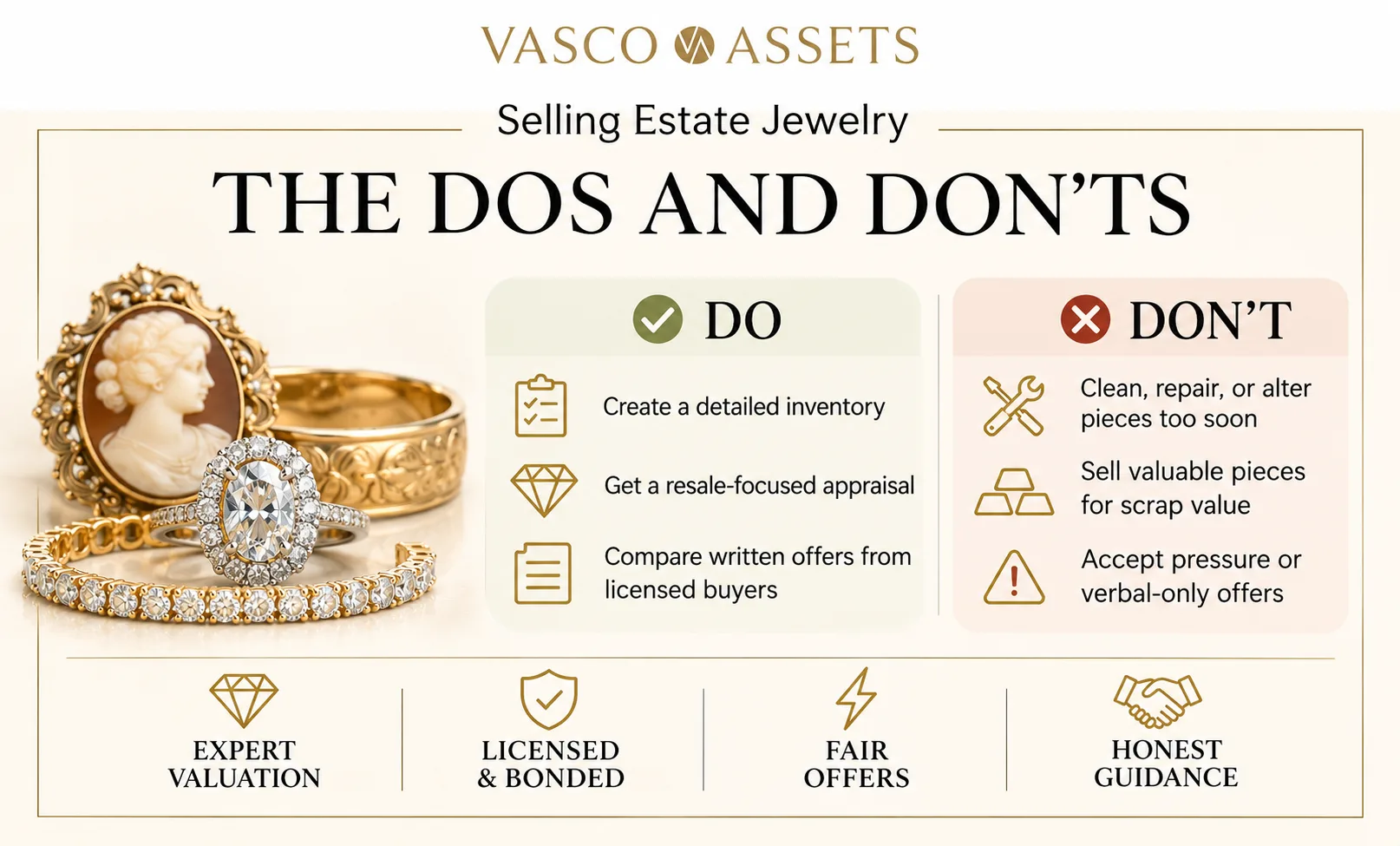
Licensed buyers in California must verify the seller’s identity, so bring valid photo ID along with any estate documents. The quick reference below summarizes the most important dos and don’ts to keep in mind throughout the process.
| Do | Don’t |
| Confirm you have legal authority to sell | Sell pieces tied up in probate without approval |
| Inventory and photograph each valuable piece | Assume plain-looking pieces are worthless |
| Get a resale-focused valuation | Rely on insurance replacement values |
| Keep pieces intact and in current condition | Clean aggressively, remove stones, or split sets |
| Compare written offers from licensed buyers | Accept scrap prices for signed or gem-set pieces |
How Vasco Assets Helps Families Sell Estate Jewelry
Vasco Assets offers estate buying services and works with heirs, executors, and families to evaluate entire collections, from gold and diamonds to designer and antique pieces. Its team, which includes certified diamond buyers, brings more than 150 years of combined experience in luxury buying. Valuations are complimentary, with no obligation to sell.
Visit the Newport Beach office for a private appointment, or send items through Sure Secure Shipping. If you accept an offer, you can receive payment the same day. Vasco also offers collateral loans and consignment services. Request your free valuation or call 949.674.3575.
Conclusion: Sell Estate Jewelry Thoughtfully
Selling estate jewelry is both a financial and an emotional decision. You protect both the collection’s legacy and its value when you inventory each piece, confirm your authority, get the right valuation, and keep pieces intact. Comparing written offers from licensed buyers helps ensure a fair price.
Vasco Assets brings expertise, transparency, and care to every estate jewelry consultation. Whether you have a single heirloom ring or an entire jewelry box, contact the team at info@vascoassets.com or visit 2024 Quail Street in Newport Beach to get started.
Frequently Asked Questions
What counts as estate jewelry?
Estate jewelry is any previously owned jewelry, regardless of age. Pieces roughly 20 years or older are often called vintage, and antique jewelry is generally 100 years old or more. Estate collections frequently mix fine jewelry, designer pieces, watches, and costume jewelry, which is why a professional evaluation is helpful.
Do I need probate to be complete before selling inherited jewelry?
Not always, but you need the authority to sell. In formal probate, the executor or administrator usually handles or approves sales of estate assets. Jewelry held in a trust or already distributed to you may follow different rules. An estate attorney can confirm your authority.
Should I get an insurance appraisal before selling?
An insurance appraisal is useful for coverage, but it usually reflects retail replacement cost rather than what a buyer will pay. For selling, a resale-focused valuation is more practical. Vasco Assets provides complimentary valuations that reflect what your pieces could realistically bring today.
Will I owe taxes when I sell inherited jewelry?
Possibly. Your tax basis is generally the fair market value on the date of the owner’s death, so you may owe tax only on gains above that value. Jewelry can be treated as a collectible for tax purposes, so consult a tax professional before selling high-value pieces.
Is costume jewelry worth anything?
Some costume jewelry has collector value, particularly signed vintage pieces from well-known makers, but most sells for modest amounts. Because fine and costume pieces can look similar, have the whole collection reviewed before discarding or donating anything. Unmarked gold and genuine gemstones are sometimes mistaken for costume jewelry.
Should I sell estate jewelry all at once or piece by piece?
Selling everything together is faster and simpler, while selling selectively may bring more for standout pieces. A knowledgeable buyer can identify which items have collector or designer value and which are best sold for their materials. That lets you choose the right approach for each piece.
Can Vasco Assets evaluate an entire estate collection?
Yes. Vasco Assets offers estate buying and can review full collections, including gold, diamonds, colored gemstones, designer jewelry, and luxury watches. Schedule a private appointment at the Newport Beach office, or ask about Sure Secure Shipping if visiting in person isn’t practical.