
Selling Estate Jewelry: Dos and Don’ts

Selling estate jewelry is rarely just a financial transaction. Whether you’ve inherited a piece from a parent, are settling a loved one’s estate, or are simply parting with jewelry that no longer fits your life, the emotional weight can make it easy to rush decisions or accept the first offer that comes along.
Vasco Assets is a licensed and bonded investment firm with certified buyers who understand both the financial and personal sensitivity of estate jewelry sales. Knowing the right dos and don’ts before you start can mean the difference between a fair outcome and a regretted one.
Why Estate Jewelry Requires Extra Care
Unlike newly purchased jewelry, estate pieces often come with incomplete paperwork, outdated appraisals, or styles that have shifted in value over decades. That combination makes it especially easy for an inexperienced seller to be undervalued.
Working with an established, certified buyer like Vasco Assets helps close that knowledge gap from the very first conversation.
Should You Sell Estate Jewelry Right Away?
Before you contact a buyer, take a step back and make sure you’re actually ready to sell. Estate jewelry can involve more than a simple owner-and-buyer transaction, particularly when the piece belonged to someone who recently died.
Do: Confirm You Have the Authority to Sell
If the jewelry is still part of an estate, don’t assume that possession means ownership or that you can sell it independently. The executor or personal representative may need to handle the property’s disposition according to the estate documents and applicable law, so resolve that question before accepting any offer.
Do: Make Sure the Family Has Agreed
When multiple beneficiaries are involved, document whether the jewelry will be distributed to an heir, retained, or sold, and how any proceeds will be handled. Getting a valuation before that decision is made gives everyone a common financial reference point to work from.
Don’t: Assume You Know What You Have
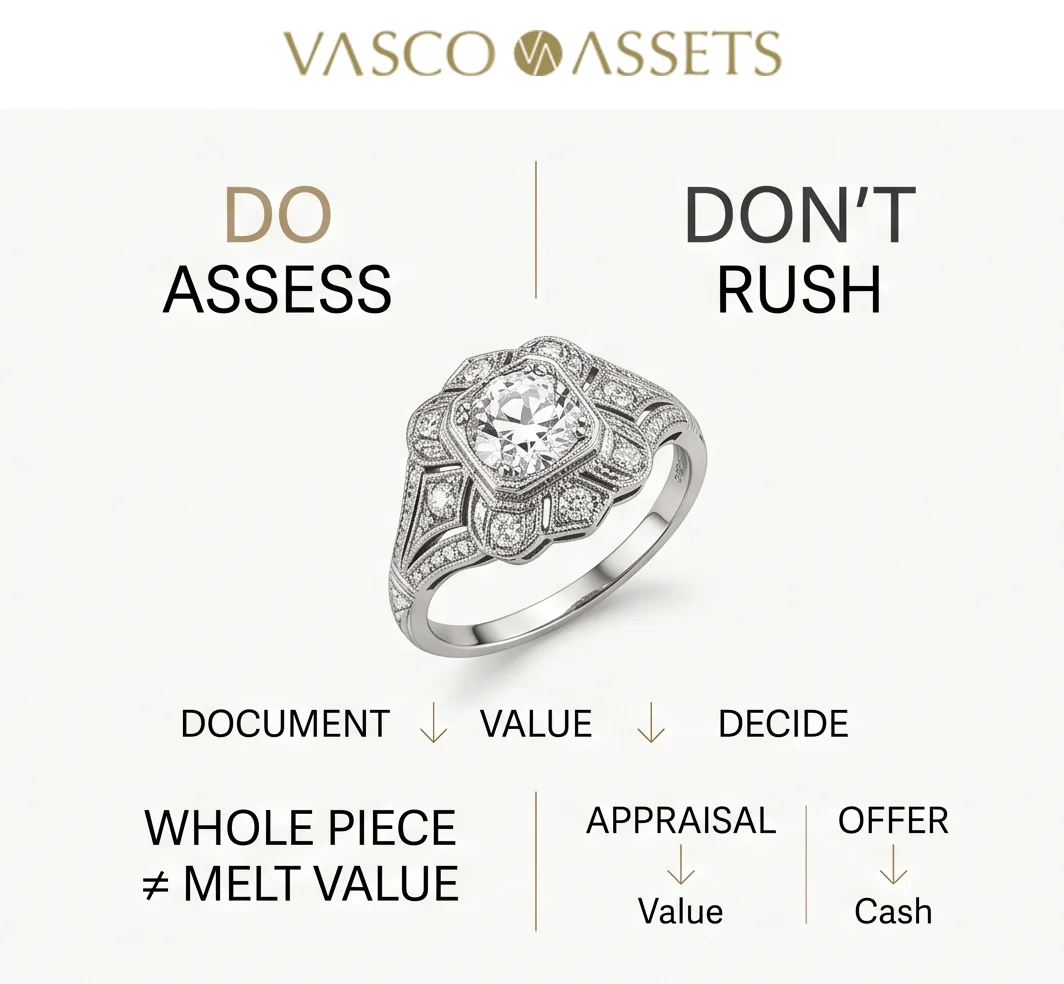
Don’t sell, melt down, or dismantle a piece before determining whether it holds value as a complete item. A signed designer piece, unusual gemstone, or vintage design may be worth considerably more intact than its raw metal content alone.
Do: Understand the Tax Implications
There can also be a tax reason to establish the jewelry’s value properly before selling. The IRS generally states that the basis of inherited property is its fair market value on the decedent’s date of death, subject to specific exceptions and alternate-valuation rules, and if inherited property is later sold for more than that basis, the difference can potentially be a taxable gain.
The Smartest First Step
The smartest first move isn’t necessarily selling, it’s establishing ownership, documenting the piece, and understanding its value before making an irreversible decision. Once those questions are settled, you can move forward with confidence rather than second-guessing the decision later.
Do: Get Multiple Valuations Before Selling
Getting more than one opinion is one of the simplest ways to protect yourself when selling estate jewelry. A single offer, especially from the first buyer you contact, gives you no real basis for knowing whether it’s fair.
Compare Apples to Apples
When comparing offers, make sure you understand what each buyer is basing their number on, whether it’s melt value, retail resale potential, or collector demand for a specific era or maker. A free assessment from a certified buyer gives you a credible number to measure other offers against.
Don’t: Assume an Old Appraisal Equals a Cash Offer
Many estate pieces come with an insurance appraisal from years or even decades ago, and it’s tempting to treat that number as the selling price. That’s rarely how it works in practice.
Appraisal Value Serves a Different Purpose
An insurance appraisal typically reflects retail replacement value, the cost of buying an equivalent new piece at retail, which is almost always higher than what a buyer can pay in cash. A resale offer instead reflects current market demand, the buyer’s acquisition costs, and what they can realistically resell the piece for.
Do: Understand the Difference Between Value Types
Before you sell, it helps to know that jewelry can carry several distinct types of value depending on the purpose. Fair market value reflects an actual selling price between a willing buyer and seller, when neither is compelled by time or need to buy or sell, and this type of value is generally required for charitable donations and estate purposes.
Why This Distinction Matters for Estates
Fair market values may run lower than retail replacement figures, which is worth knowing if you’re comparing an old insurance appraisal to what you’re being offered today. Neither number is wrong, they simply answer different questions.
Don’t: Sell to the First Unverified Buyer You Find
Estate jewelry often surfaces during an already stressful time, whether it’s probate, a move, or grief, which makes it tempting to accept whatever offer comes fastest. Unverified buyers, whether online or in person, are where sellers most often lose real value.
Watch for Red Flags
Be cautious of buyers who won’t explain how they arrived at a number, pressure you to decide immediately, or lack verifiable credentials and reviews. A legitimate, licensed buyer will walk you through their reasoning and give you time to consider the offer.
Do: Gather Documentation Before You Reach Out
Whatever paperwork exists for the piece, original receipts, prior appraisals, certification documents, or even old insurance records, gather it before contacting a buyer. Documentation doesn’t just support a stronger offer, it also speeds up the entire process.
When Documentation Is Missing
Missing paperwork isn’t a dealbreaker. A certified buyer can still assess the piece directly, examining metal content, gemstone quality, craftsmanship, and maker’s marks to determine value without relying solely on old records.
Don’t: Break Up a Piece Without Expert Advice
It’s sometimes assumed that removing stones from a setting or melting down gold separately will net more money than selling the piece intact. That’s not always true, and it can actually destroy value in cases where the piece itself, its design era, or its maker carries collector demand.
Let an Expert Assess the Whole Picture
A knowledgeable buyer evaluates whether a piece is worth more as a complete item or broken into its component materials, and prices it accordingly. Making that call yourself before getting an expert opinion risks giving away value you didn’t know existed.
Do: Consider Your Timeline and Options
Selling estate jewelry doesn’t always have to mean a permanent transaction right away. If you’re not certain you’re ready to part with a piece permanently, a collateral loan lets you access cash against its value while retaining ownership.
Give Yourself Room to Decide
This is especially useful during estate settlements, where family members may need time to agree on next steps. Having options beyond an immediate, irreversible sale can reduce pressure during an already difficult process.
Why Sell Your Estate Jewelry to Vasco Assets
Vasco Assets combines certified gemological and metals expertise with over 150 years of combined team experience, ensuring estate pieces are assessed accurately rather than guessed at. That expertise is backed by a reputation built on over 100 five-star reviews from sellers who’ve been through the same process.
A Global Buyer Network Behind Every Offer
As a multinational luxury asset firm, Vasco Assets can match your estate jewelry against a much broader buyer pool than a single local storefront, often resulting in stronger offers. Combined with secure, insured shipping, you can sell confidently even if you’re not local to Newport Beach.
A Process Designed for Sensitive Situations
The team understands that estate sales often come during emotionally difficult periods and works to make the process transparent and unhurried. You’ll receive a guaranteed offer after in-person inspection, with no obligation to accept it.
Honor the Piece by Selling It the Right Way
Estate jewelry carries history, whether it’s a family legacy or simply a chapter you’re ready to close. Selling it thoughtfully, with the right information and the right buyer, ensures that history is honored with a fair, accurate outcome instead of a rushed regret.
Ready to find out what your estate jewelry is really worth? Request a free, no-obligation valuation from Vasco Assets today and get an expert opinion you can trust.
Frequently Asked Questions
Who has the right to sell inherited jewelry?
Authority typically rests with the estate’s executor or personal representative until the property is formally distributed, not simply whoever is holding the piece. If you’re unsure who has that authority, resolve the question before accepting any offer.
Do I need a new appraisal before selling estate jewelry?
Not necessarily, since a certified buyer can assess the piece directly regardless of whether an appraisal exists. Having one, along with any original documentation, can still speed up the process and support a stronger offer.
Is fair market value the same as what a buyer will pay?
Not exactly, but it’s a closer benchmark than a retail replacement appraisal. Fair market value reflects an actual selling price between a willing buyer and seller, while a specific buyer’s cash offer also factors in their acquisition costs and resale potential.
Should I remove stones or melt down gold before selling?
No, not without expert advice first. A piece may be worth more intact than broken apart, especially if its design, era, or maker carries collector value that a certified buyer can identify.
Could selling inherited jewelry create a tax bill?
It’s possible. The IRS generally treats the basis of inherited property as its fair market value on the date of death, so selling for more than that basis can result in a taxable gain, though rules and exceptions vary by situation.
What if family members disagree about selling an inherited piece?
Consider a collateral loan as a middle-ground option, since it provides liquidity without requiring an immediate, permanent decision. This can buy time for family discussions during probate or estate settlement.
How long does selling estate jewelry typically take?
After an initial valuation, in-person or shipped inspection typically takes just a few business days. Once you accept an offer, payment is usually processed quickly, without the delays common to consignment or estate sale services.