
Why Is Effy Jewelry So Expensive? Pricing Breakdown, Resale Value & Investment Reality
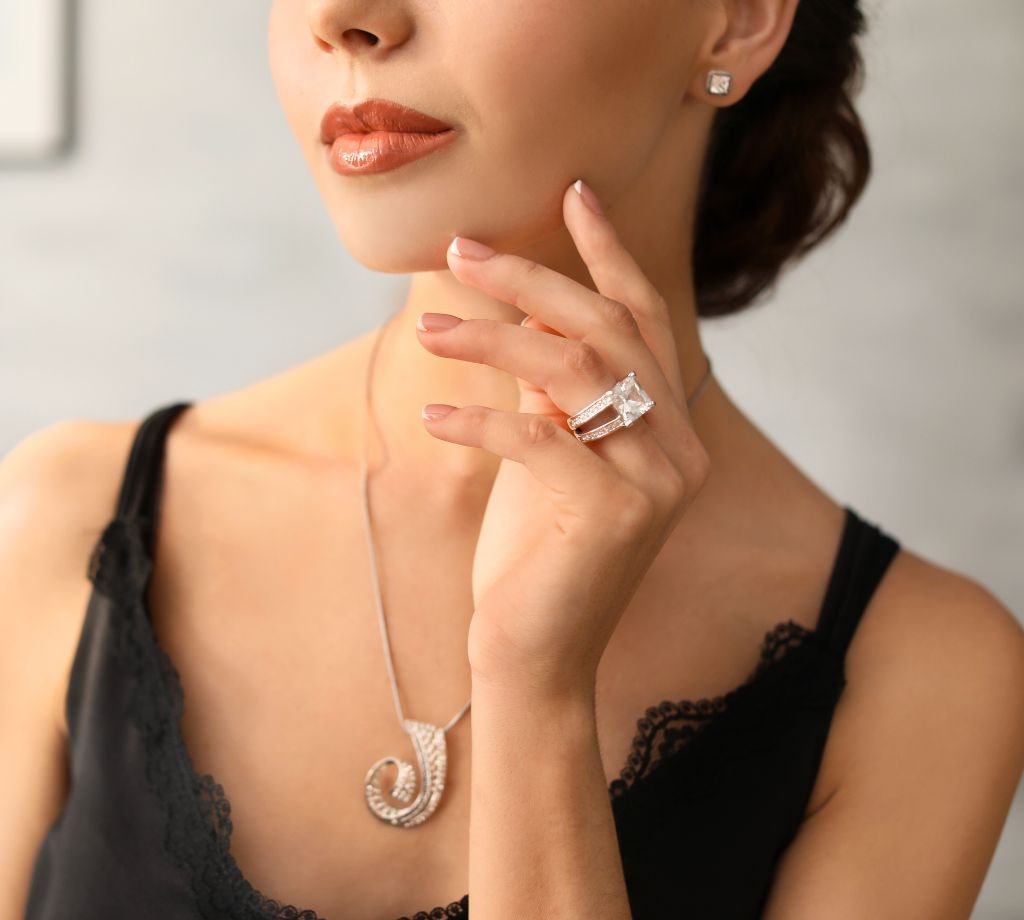
If you’ve ever browsed Effy Jewelry and felt sticker shock, you’re not alone. A single Effy ring can cost anywhere from $500 to over $10,000 — but is that price justified? And more importantly, does Effy hold its value the way heritage houses like Cartier or Tiffany & Co. do? At Vasco Assets, we help clients navigate exactly these questions every day — whether they’re looking to buy, sell, or simply understand what their jewelry is worth.
This guide answers both questions with actual data. We’ll break down what drives Effy’s pricing, where the money goes, how it compares to top luxury brands, and — crucially — what happens to your investment when you try to resell.
What Federal Guidelines Say About Jewelry Pricing
Before looking at Effy, note that U.S. law regulates jewelry pricing. The FTC’s Jewelry Guides (16 CFR Part 23) require accurate disclosure of metal, gemstone, and pricing details. Misrepresenting gold or gem quality is deceptive under Section 5 of the FTC Act, letting buyers ask informed questions and hold brands accountable.
How Gold Content Actually Drives Effy’s Pricing
Effy primarily uses 14K gold (58.3% pure gold) and 18K gold (75% pure gold) across its collections. These aren’t just marketing labels — they directly determine the intrinsic material cost in every piece.
Here’s how the math works in practice. Based on current market conditions, 14K gold runs roughly $56 per gram in raw material cost, while 18K sits closer to $72 per gram. On a 5-gram piece, that’s an $80 difference in gold content alone — and that gap widens further once you add labor, taxes, and retail markup. On average, 18K pieces cost 25–30% more than equivalent 14K designs.
Gold prices don’t stand still, either. According to the World Gold Council’s Full Year 2024 Gold Demand Trends report, the average gold price in 2024 rose 23% year-on-year to $2,386 per ounce — setting 40 new record highs. In 2025, gold set 53 all-time price records, with total demand value surpassing $555 billion. When raw gold becomes this expensive, it directly pressures the retail price of any gold jewelry, including Effy’s.
The key point: heavier Effy pieces, like large cocktail rings, cost more partly due to containing more gold, which contributes significantly to their price.
Gold Purity Quick Reference
| Karat | Gold Content | Typical Use | Relative Cost |
| 24K | 99.9% | Investment bars | Highest |
| 18K | 75% | Fine jewelry, Effy premium pieces | High |
| 14K | 58.3% | Fine jewelry, most Effy pieces | Moderate-High |
| 10K | 41.7% | Fashion/budget jewelry | Lower |
Where the Money Actually Goes: The Full Cost Stack
Raw Materials (Gold + Gemstones)
The foundation of pricing. For a 14K gold ring with diamonds, this can be 20–40% of retail price, depending on weight and stone quality.
Gemstone Grading and Sourcing
Effy’s high-clarity, color-graded gemstones—from diamonds to tanzanite, morganite, and sapphires—add real cost, reflecting rarity and optical performance.
Craftsmanship and Labor
Using lost-wax casting and hand-set stones, manufacturing and design typically add 30–60% to material costs for quality handcrafted pieces.
Brand Premium and Marketing Overhead
Celebrity endorsements, magazine placements, and department-store presence contribute to markups, often 300–475% above material costs.
Retail Distribution Model
Effy sells via department stores and cruise boutiques, which adds overhead compared to direct-to-consumer models.
Warranty and Service
Effy’s lifetime warranty on manufacturing defects requires financial reserves, factored into pricing.
Is Effy Considered Luxury Jewelry?
Effy is “accessible luxury”—above fashion jewelry but below heritage brands like Cartier or Van Cleef & Arpels. Founded in 1979, it offers real materials and craftsmanship but lacks the secondary market strength of top-tier houses. Effy is fine jewelry, just a different investment than a Cartier Love Bracelet.
The Resale Reality: What the Numbers Actually Show
This is where the most important gap opens up — and where most articles go silent.
Heritage Luxury: Strong Secondary Market Performance
According to Rebag’s Clair Report, Cartier retains an average of 79% of its retail value at resale across its jewelry line. Specific iconic pieces perform even better:
- Cartier Love bracelet: 85–99% average value retention
- Cartier Juste un Clou bracelet: ~95% retention
- Cartier bracelets as a category: 96% average retention
Tiffany & Co. shows more variable performance. The RealReal’s resale data via National Jeweler shows the Tiffany T collection retaining about 69% of retail value, while iconic pieces like the Return to Tiffany Heart Tag Choker have reached 94% retention. The brand’s overall average sits closer to 50%, though certain classic pieces significantly outperform that figure.
Van Cleef & Arpels leads the fine jewelry category, with the Alhambra collection selling for 86% of retail and 90% of pieces selling within 30 days.
Effy: A Different Picture
Live secondary market data from The RealReal tells a candid story about Effy’s resale performance. Actual listings show Effy pieces selling at:
- 60–79% off estimated retail for cocktail rings and gemstone rings
- 57–76% off for pendants and necklaces
- 62–83% off for specialty pieces with colored stones
In practice, this means Effy pieces typically trade in the secondary market at 20–40 cents on the dollar relative to original retail price.
Why the gap? Several factors compound:
- Department-store retail markup: Effy’s distribution through major retailers adds significant overhead that inflates the retail price relative to intrinsic value, creating a wider retail-to-resale spread.
- Weaker institutional collector demand: Cartier and Van Cleef benefit from auction house coverage, collector communities, and institutional reseller networks that Effy lacks.
- Semi-precious gemstone performance: Many Effy designs feature morganite, prasiolite, chalcedony, and other semi-precious stones that depreciate faster on the secondary market than diamond or high-grade colored stone pieces.
- Silver pieces depreciate fastest: Effy’s sterling silver pieces lose the most value on resale, as silver has lower intrinsic value and less brand premium in the resale market.
This doesn’t make Effy a bad purchase — but it should recalibrate expectations for anyone thinking of Effy primarily as a financial investment.
Brand-by-Brand Comparison: Pricing vs. Resale Value
| Brand | Tier | Avg. Resale Retention | Best-Performing Pieces |
| Cartier | Heritage Luxury | ~79% overall; 85–99% iconic | Love bracelet, Juste un Clou, Tank watch |
| Van Cleef & Arpels | Heritage Luxury | ~74–86% | Alhambra collection |
| Tiffany & Co. | Heritage Luxury | ~50% avg; 70–94% iconic | Return to Tiffany, T collection, Solitaire rings |
| Effy | Accessible Luxury | ~20–40% in practice | 14K gold + diamond pieces retain most |
| Non-branded gold jewelry | No brand premium | Melt value (varies) | Pure gold weight only |
Effy vs. Intrinsic Value: A Simple Framework
A useful way to evaluate any Effy piece is to estimate its intrinsic value before purchase:
Step 1 — Determine gold weight. Ask for the gram weight of the piece.
Step 2 — Calculate gold content. For a 14K piece: weight (g) × 0.583 = pure gold grams. For 18K: weight (g) × 0.75 = pure gold grams.
Step 3 — Apply spot price. Multiply pure gold grams by the current gold price per gram (spot price per troy oz ÷ 31.1). At $2,900/oz (approximate 2025 levels), that’s about $93/gram of pure gold.
Step 4 — Add stone value. For diamond-set pieces, factor in the approximate wholesale diamond value based on carat weight and grade (a GIA-certified stone holds more value than an ungraded one).
Step 5 — Compare to retail. The difference between intrinsic value and retail price is the combined premium for craftsmanship, brand, design, distribution, and overhead.
This framework won’t give you an exact number, but it helps you understand what portion of Effy’s price is material value versus brand value — and calibrate your expectations for resale.
When Is Effy Worth It?
Effy makes the most sense as a purchase when:
- You value the design and wearability over financial return. Effy’s bold, colorful designs are genuinely distinctive — you’re buying something visually striking.
- You’re purchasing higher-karat gold with meaningful diamond content. These pieces retain the most material value and command better secondary-market prices.
- You’re not prioritizing resale. Unlike Cartier’s Love bracelet or Tiffany’s classic solitaire, Effy doesn’t have a robust collector ecosystem to support strong resale.
- You buy during sales or at a discount. Effy is frequently discounted through Macy’s and department-store promotions, which meaningfully reduces the retail-to-intrinsic-value gap.
Should Jewelry Be Bought as an Investment?
In 2025, gold hit 53 record highs, yet global jewelry demand fell, showing buyers see jewelry differently from bullion. Fine jewelry holds partial value plus emotional and aesthetic appeal. Pieces that retain or gain value are iconic, from heritage brands, and use high-karat gold or top-grade diamonds. Effy meets some—but not all—of these criteria.
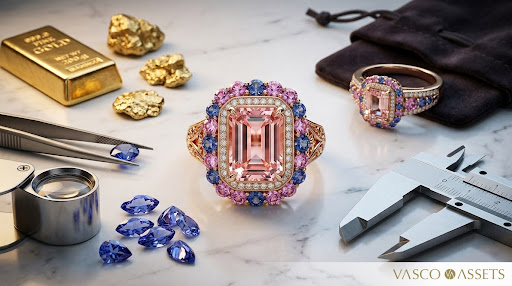
Bottom Line
Effy Jewelry commands a real price due to precious metals, quality gemstones, skilled craftsmanship, marketing, distribution, and warranty—but high retail doesn’t mean strong resale. Pieces typically trade well below retail, especially those with semi-precious stones.
Buy Effy for design and craftsmanship; choose Cartier or Van Cleef for long-term value. If selling Effy, work with a specialist like Vasco Assets, who values the full market worth—not just metal content. Get a free valuation at vascoassets.com.
Frequently Asked Questions
Is Effy Jewelry Real Gold?
Yes. Effy uses genuine 14K (58.3% gold) and 18K (75% gold) across its collections. These are not gold-filled or plated and meet FTC purity standards.
Why Is Effy Cheaper at Macy’s?
Department-store promotions and sales reduce prices. Original retail reflects full markups from distribution and marketing.
Does Effy Jewelry Hold Its Value?
Not strongly. Pieces typically resell at 20–40% of retail. 14K/18K gold with diamonds retain value better than sterling silver or semi-precious stones.
What Is Effy’s Lifetime Warranty?
Covers manufacturing defects only—not wear, loss, or accidental damage. Costs are included in retail pricing.
Is Effy Better Than Kay or Zales?
Effy uses higher-karat gold, bolder designs, and distinctive gemstones, placing it above mall chains. For investment, Cartier and Tiffany outperform all.
Which Effy Pieces Retain the Most Value?
18K gold with natural diamonds hold value best; sterling silver or semi-precious stones depreciate fastest.
How Do I Find Out What My Effy Jewelry Is Worth?
Check gold weight and karat, calculate melt value, add wholesale value of diamonds or certified gemstones. Specialist buyers typically offer more than pawn shops.
Should I Buy Effy Jewelry as an Investment?
Only with tempered expectations. Effy is best for design and wearability, not financial return. For investment-grade value, choose heritage luxury brands or certified precious metals.