
Sell Gold Coins: Bullion vs. Numismatic Valuation in Orange County
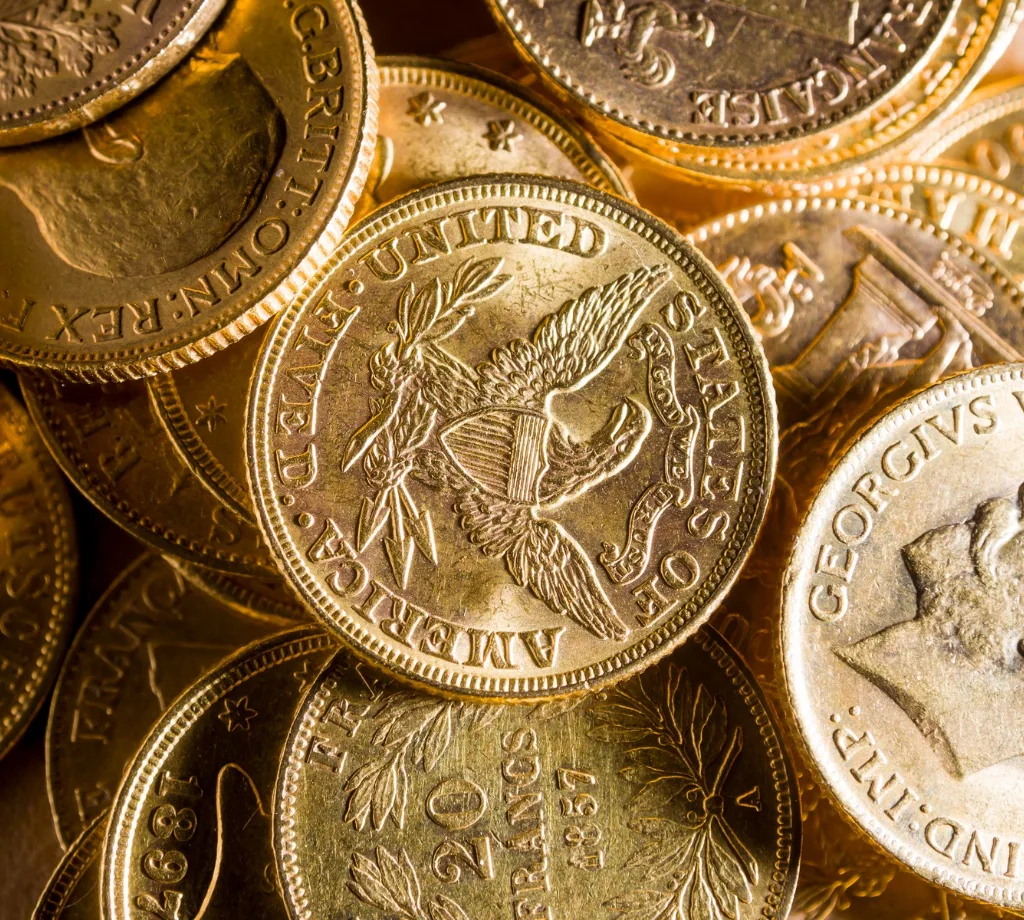
Gold coins get valued in two completely different ways, and confusing them is the fastest way to accept an offer far below what your coins are actually worth. A common-date American Gold Eagle and a rare 19th-century gold coin can look similar at a glance but sell through entirely different pricing logic.
Vasco Assets, a licensed and bonded luxury asset firm based in Newport Beach, evaluates gold coins with both bullion and numismatic expertise, since treating every coin the same way leaves real value on the table. Understanding the difference can help you get an offer that reflects what your specific coins are actually worth.
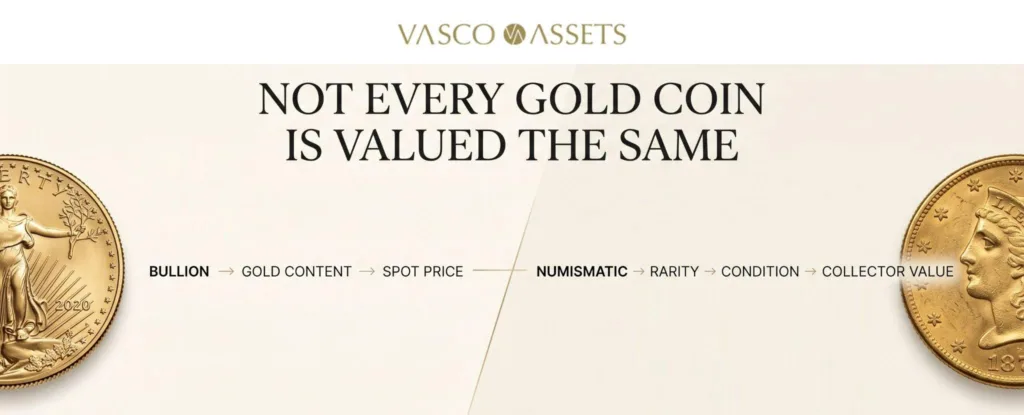
Bullion Value vs. Numismatic Value: The Core Distinction
What Bullion Value Actually Means
Bullion value is based purely on a coin’s gold content, calculated against its weight and purity relative to current spot gold pricing. Gold has traded at historically elevated levels through 2026, which means even common gold coins carry meaningfully higher bullion value than they did just a few years ago.
What Numismatic Value Adds On Top
Numismatic value reflects a coin’s rarity, historical significance, mint mark, condition, and collector demand — factors that have nothing to do with the gold inside it. A rare coin in exceptional condition can sell for many multiples of its melt value, while a common, worn coin of the same weight might sell for close to bullion price alone.
Build a Coin-by-Coin Valuation Waterfall
Why Total Weight Isn’t a Reliable Starting Point
A reliable gold-coin valuation should happen one coin at a time, not by applying a single price to the total weight of a collection. The first step is identification: recording the country, denomination, year, mint mark, and exact coin type. NGC’s identification standards specifically use details like year struck, mint mark, weight, and gold fineness to describe gold coins precisely.
Verifying Actual Gold Content, Not Just Gross Weight
Next comes verifying authenticity and determining the coin’s actual gold content, since gross weight alone can be misleading — many gold coins are alloys rather than pure gold. The U.S. Mint’s American Gold Eagle, for example, is 91.67% gold but still contains its stated one troy ounce of fine gold in the one-ounce version, and NGC similarly distinguishes total coin weight from actual gold weight when calculating precious-metal content.
Checking for a Numismatic Premium Only After Metal Value Is Set
Only after establishing metal value should a potential numismatic premium be evaluated, checking the date, mint mark, variety, condition, and grade against relevant market data and comparable examples. NGC’s research resources provide coin-specific pricing and census information, while its grading system documents preservation differences that can meaningfully affect collectible value.
The Full Waterfall, Step by Step
Translating these findings into an actual offer follows a consistent sequence: identify the coin, authenticate it, calculate its fine-gold value, check the date and mint mark, assess condition, compare market data, add any applicable premium, and only then determine the final offer. For mixed collections, this waterfall prevents a potentially rare coin from being treated as nothing more than its melt value, while keeping ordinary bullion tied to its measurable precious-metal content.
How to Tell Which Category Your Coins Fall Into
Common Bullion Coins
Modern coins like American Gold Eagles, Canadian Gold Maple Leafs, and similar current-mint bullion products are generally valued close to their gold content plus a small premium. These coins are produced in large quantities specifically for investment purposes, so rarity plays little to no role in their pricing.
Coins With Genuine Numismatic Potential
Older coins, low-mintage years, specific mint marks, and coins in exceptional, well-preserved condition can carry significant numismatic premiums above melt value. Identifying whether your coins fall into this category requires expertise — a generalist buyer without numismatic training will often default to melt value even when a coin deserves considerably more.
Why Current Gold Prices Matter for Your Bullion Value Floor
Gold has traded at record or near-record levels through much of 2026, driven by factors like central bank buying and broader economic uncertainty. That pricing environment raises the baseline value of every gold coin’s metal content, which means even coins with no numismatic premium are worth meaningfully more today than they would have been just a couple of years ago.
This creates a price floor similar to what applies to gold jewelry: no gold coin should sell for less than its melt value, regardless of condition, since the metal itself sets a hard minimum. A trustworthy buyer calculates this floor transparently and explains any premium above it separately.
How Condition Affects Numismatic Coins
Grading Standards for Collectible Coins
Numismatic coins are typically graded on standardized scales that assess wear, luster, and overall preservation, with even small grade differences translating into significant price differences for rare dates. A coin graded by a reputable third-party grading service like NGC carries more market confidence than an ungraded coin of claimed similar quality.
Why Ungraded Coins Still Deserve Expert Review
If your coins haven’t been professionally graded, that doesn’t mean they lack numismatic value — it simply means a specialist needs to assess them directly rather than relying on a certificate. Bringing any existing grading documentation, purchase records, or provenance information to your appraisal can meaningfully speed up this process.
What the Appraisal Process Looks Like
Initial Sorting Between Bullion and Numismatic
The process typically starts with a specialist sorting your coins into bullion and potential numismatic categories based on date, mint mark, and visible condition. This initial pass determines which coins need deeper numismatic evaluation and which can be priced primarily against current gold spot pricing.
Detailed Evaluation of Numismatic Candidates
Coins identified as having numismatic potential receive closer evaluation, checking specific dates, mint marks, and condition against known market data for that exact coin. This step is where real expertise separates an accurate offer from a generic, melt-value-only estimate.
Receiving a Combined Offer
Your final offer typically reflects bullion value for common coins plus any numismatic premium identified for rarer pieces, presented as a combined and itemized total. A transparent buyer breaks down which coins were valued which way, rather than giving you one lump figure.
Selling a Mixed Collection
Why Sorting Matters More Than Total Weight
Many Orange County sellers come in with mixed collections — some common bullion coins alongside a few potentially rarer pieces inherited from family. Selling the entire lot to a buyer who only calculates by total gold weight risks significantly undervaluing any numismatic pieces hiding in the collection.
The Value of Working With a Dual-Expertise Buyer
A buyer with both bullion and numismatic expertise can properly separate these categories within a single collection, ensuring you’re paid appropriately for each coin rather than an averaged, generic rate. This distinction can meaningfully change your total payout, especially for older or inherited collections.
How Vasco Assets Approaches Gold Coin Valuation
Vasco Assets brings a team the company describes as having over 150 years of combined experience in luxury buying to gold and coin evaluations, applying both bullion pricing and numismatic expertise as appropriate. Their Sell Your Assets service provides a guaranteed best-price valuation for sellers who want a straightforward, outright sale.
If you’d rather retain your coins while accessing liquidity, Collateral Loans let you borrow against their value instead of selling outright. For coins with genuine numismatic rarity, Consignment Services can connect them with a broader network of collectors actively seeking that specific coin.
Selling In Person or Remotely From Orange County
Orange County sellers can bring coins in for direct, in-person evaluation, which offers the fastest path from appraisal to payment. For sellers who aren’t local or simply prefer not to travel, Sure Secure Shipping allows you to begin the process remotely while your coins remain fully insured throughout transit.
Confirm that any shipment is insured for the coins’ estimated value before sending anything, and ask what happens if you decide to decline the final offer once your collection has been reviewed.
Questions to Ask Before You Sell Your Gold Coins
Before finalizing any sale, ask how the buyer distinguishes between bullion and numismatic value within your collection, rather than accepting a single melt-value-based number for everything. Confirm whether they have staff with genuine numismatic expertise, not just bullion pricing knowledge.
It’s also worth asking how current gold spot pricing factors into your bullion valuation, and requesting an itemized breakdown showing which coins were valued which way.
Getting Paid What Your Coins Are Actually Worth
Selling gold coins well depends on working with a buyer who understands the difference between melt value and collector value, and applies both correctly across your collection. Current gold pricing, coin-by-coin sorting, and numismatic expertise together determine whether you walk away with a fair, accurate total.
If you’re ready to find out what your gold coins are truly worth, Vasco Assets offers the dual bullion and numismatic expertise this category requires. Request a free valuation and get a transparent, expert opinion before you decide how to sell.
Frequently Asked Questions
What’s the difference between bullion value and numismatic value?
Bullion value is based purely on a coin’s gold content relative to current spot pricing, while numismatic value reflects rarity, condition, and collector demand independent of the metal itself. A coin can carry both, either, or neither type of value.
Why isn’t total collection weight a reliable way to value gold coins?
Valuing by total weight alone risks treating a potentially rare coin as nothing more than its melt value. A proper coin-by-coin waterfall identifies, authenticates, and checks each coin individually before adding any applicable numismatic premium.
How does the current gold price affect what I’ll be offered for my coins?
Gold has traded at historically elevated levels through 2026, which raises the baseline melt value of every gold coin. This creates a price floor that applies regardless of a coin’s numismatic status.
Can a common gold coin still have numismatic value?
It’s less likely, but certain low-mintage years, mint marks, or exceptional condition examples of otherwise common coins can occasionally carry a modest premium. A specialist evaluation is the only reliable way to know for certain.
Do I need my coins professionally graded before selling?
Not necessarily, though existing grading documentation from a service like NGC can speed up the appraisal process. A qualified buyer can assess ungraded coins directly as part of their evaluation.
What happens if I have a mixed collection of common and potentially rare coins?
A buyer with both bullion and numismatic expertise should sort your collection accordingly, valuing each coin appropriately rather than pricing everything at a single blended rate. This distinction can meaningfully affect your total payout.
Does Vasco Assets buy gold coins from sellers outside Orange County?
Yes. Vasco Assets serves clients internationally and offers secure, insured shipping so sellers outside the local area can still receive a guaranteed, in-person valuation.