
Sell Tiffany Jewelry: Schlumberger, Blue Book & Estate Piece Valuation
Not all Tiffany jewelry sells for the same reasons, and lumping a mass-produced silver piece together with a Jean Schlumberger design or a rare estate Blue Book piece leads to a badly mispriced offer. Tiffany’s catalog spans nearly two centuries, and selling it well means knowing which category your piece actually belongs to.
Vasco Assets, a licensed and bonded luxury asset firm based in Newport Beach, evaluates Tiffany jewelry with the brand-specific expertise this range requires. Understanding what actually drives value across Tiffany’s different tiers can help you get an offer that reflects what your piece is genuinely worth.
Why “Tiffany Jewelry” Isn’t One Valuation Category
The Wide Range Hiding Under One Brand Name
Tiffany produces everything from accessible sterling silver pieces to rare, one-of-a-kind high jewelry, and these categories sell through completely different pricing logic. A buyer who prices every Tiffany piece the same way, regardless of tier, is almost certainly undervaluing anything above entry-level.
Why Signature and Designer Matter So Much
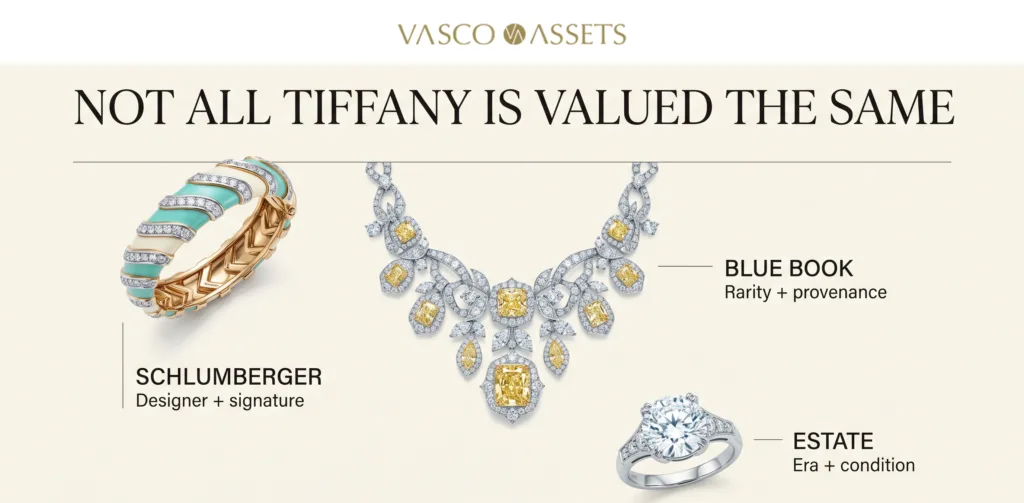
Certain names within Tiffany’s history — most notably Jean Schlumberger — carry collector recognition that meaningfully affects resale value independent of the piece’s materials. Knowing whether your piece carries a recognized designer’s signature is one of the first questions worth answering before requesting an offer.
Understanding Jean Schlumberger Pieces
Why Schlumberger Work Commands a Premium
Jean Schlumberger served as Tiffany’s creative director starting in 1956 and was the first designer in the house’s history given the distinction of signing his own work. His whimsical, sculptural pieces — drawing on nature and mythology — have remained highly coveted for decades and are only one of four designers Tiffany has ever allowed to sign pieces.
What to Look for on a Potential Schlumberger Piece
Authentic Schlumberger pieces typically carry his signature stamped into the metal, and their design language tends to be distinctly organic, bold, and sculptural compared to more conventional Tiffany pieces. Tiffany’s own Schlumberger archive documents his design history, which is useful context when trying to identify whether a piece matches his known body of work.
Build a Tiffany-Specific Valuation Waterfall
Identify, Attribute, and Date the Piece First
Tiffany jewelry should be valued as a specific object, not simply as “Tiffany jewelry.” A useful valuation waterfall starts by identifying the exact collection or design, then recording any designer signature, hallmarks, and approximate production era, since Tiffany’s design history includes distinct bodies of work like Jean Schlumberger’s Sixteen Stone, Bird on a Rock, Apollo, and Rope collections.
Authenticate and Evaluate the Physical Piece
Next comes authentication and physical evaluation: confirming that the markings, construction, materials, and design are consistent with the claimed Tiffany piece. This includes evaluating the metal, gemstones, craftsmanship, and condition, including any repairs, alterations, or replaced components — and for higher-value pieces, provenance and supporting documentation can add further evidence of the object’s history.
Why Market Comparison Beats Retail Price Lookup
The final step is market comparison rather than a retail price lookup. Sotheby’s notes that its Tiffany specialists weigh condition, Tiffany signature, comparable auction prices, gemstone quality, and ownership history when forming a sale estimate, which makes comparable sales far more useful than the original retail price. Tiffany itself states that its retail price updates are intended for insurance purposes and don’t represent an estimate of what a piece is worth on the estate or auction market.
The Full Sequence, Start to Finish
Putting this together, the sequence runs from identify, to attribute, to date, to authenticate, to evaluate materials, to assess condition, to research comparables, to document provenance, to choose a sale channel, and finally to calculate an expected offer. This approach helps prevent a signed designer piece, rare estate jewel, or exceptional gemstone from being reduced to its metal weight or current retail equivalent.
What the “Blue Book” Actually Is — and Isn’t
A Catalog, Not a Price Guide
Tiffany’s Blue Book, first published in 1845 as one of the earliest mail-order catalogs in the United States, is today an annual showcase of the house’s finest high jewelry creations. It’s worth understanding clearly: the Blue Book is Tiffany’s own marketing catalog of rare, often museum-quality pieces, not an independent price guide or appraisal resource.
Why Blue Book Pieces Still Deserve Special Handling
Pieces that originated in a Blue Book collection tend to carry exceptional rarity and craftsmanship, often built around rare gemstones and techniques unavailable in Tiffany’s standard retail lines. If your piece came from a Blue Book collection, or you suspect it might have, that context is worth flagging explicitly to any appraiser, since these pieces require evaluation well beyond standard material and brand recognition.
Evaluating Estate and Vintage Tiffany Pieces
Why Era Matters as Much as Design
Vintage and estate Tiffany pieces span design eras with very different collector followings, from mid-century Schlumberger work to more recent designer collaborations. Identifying the approximate era and design period of your piece helps establish which comparable sales are actually relevant to its valuation.
Documentation and Provenance
Original boxes, certificates, and purchase receipts support authentication and value for estate pieces the same way they do for other luxury jewelry houses. For inherited pieces without documentation, a specialist can still authenticate through hallmarks, signatures, and construction details specific to Tiffany’s manufacturing history across different eras.
How a Specialist Appraisal Process Works
Initial Identification
The process starts with identifying your piece’s category — standard retail line, designer-signed work, or potential Blue Book origin — based on photos, signatures, and any available documentation.
Authentication and Physical Evaluation
Next, the piece is physically authenticated, with a specialist checking hallmarks, signatures, and construction details against known Tiffany manufacturing standards for the relevant era.
Receiving a Final, Itemized Offer
Once evaluation is complete, you receive a formal offer that should reflect materials, craftsmanship, and any applicable designer or rarity premium, explained clearly rather than presented as a flat number.
Selling Outright vs. Consignment for Tiffany Jewelry
Selling outright provides immediate, guaranteed payment, which suits sellers who want certainty for standard retail-line pieces or common designs. This route works well when market demand and pricing for your specific piece are well established.
Consignment can potentially yield a stronger price for rare designer-signed or Blue Book-origin pieces, connecting your jewelry with collectors actively seeking that specific work. This path takes longer and isn’t guaranteed, but it’s worth serious consideration for exceptional pieces.
How Vasco Assets Approaches Tiffany Valuation
Vasco Assets brings a team the company describes as having over 150 years of combined experience in luxury buying to every piece it evaluates, including designer and estate jewelry from houses like Tiffany & Co. Their Sell Your Assets service provides a guaranteed best-price valuation for sellers who want a straightforward, outright sale.
For sellers considering a different path, Consignment Services connect rare or designer-signed pieces with a broader network of qualified buyers. If you’d rather retain ownership while accessing liquidity, Collateral Loans let you borrow against your jewelry’s value instead of selling it outright.
Selling Remotely With Insured Shipping
Not every seller is local to Newport Beach, and Tiffany jewelry deserves the same careful handling whether you’re shipping across the state or across the country. Vasco Assets offers Sure Secure Shipping so you can start the process remotely and still receive an in-person, guaranteed valuation.
Confirm that any shipment is insured for the piece’s full estimated value before sending anything, and ask specifically what happens if you decide to decline the final offer once your jewelry has been reviewed in person.
Questions to Ask Before You Sell
Before committing to any buyer, ask how they specifically identify designer-signed Tiffany pieces, and whether their team has direct experience with Schlumberger or other named designers. Confirm whether they offer both outright sale and consignment options, since a buyer offering only one path may not be the best fit for a rare piece.
It’s also worth asking how the final offer accounts for any designer signature or provenance you believe your piece has, and requesting a clear explanation of how that premium was calculated.
Getting a Price That Reflects Tiffany’s Full Range
Selling Tiffany jewelry well means working with a buyer who understands the real difference between standard retail lines, designer-signed work, and rare Blue Book-origin pieces. Correct identification, authentication depth, and valuation transparency together determine whether you walk away with an offer that reflects your piece’s true worth.
If you’re ready to find out what your Tiffany jewelry is really worth, Vasco Assets offers the specialized expertise this category requires. Request a free valuation and get a transparent, expert opinion before you decide how to sell.
Frequently Asked Questions
What makes Jean Schlumberger pieces more valuable than standard Tiffany jewelry?
Schlumberger was one of only four designers Tiffany has ever allowed to sign their work, and his bold, sculptural designs carry strong collector recognition independent of the piece’s raw materials. Authentic signed pieces typically command a meaningful premium over comparable unsigned jewelry.
Is the Tiffany Blue Book a price guide I can use to value my jewelry?
No. The Blue Book is Tiffany’s own annual high-jewelry catalog showcasing rare, often one-of-a-kind pieces — it’s a marketing collection, not an independent valuation resource.
Why isn’t Tiffany’s current retail price a good way to value my piece?
Tiffany states that its retail price updates are meant for insurance purposes and don’t reflect what a piece is worth on the estate or auction market. Comparable sales data is a far more reliable guide for resale value.
How can I tell if my Tiffany piece was designed by Jean Schlumberger?
Look for his signature stamped into the metal, along with the distinctly organic, whimsical design style associated with his work. A specialist familiar with his archive can confirm authenticity beyond a visual guess.
Does missing documentation affect the value of an estate Tiffany piece?
It can, but a specialist can still authenticate through hallmarks, signatures, and construction details specific to Tiffany’s manufacturing history even without original paperwork. Any documentation you do have is still worth bringing to your appraisal.
Should I sell my Tiffany piece outright or consign it?
Selling outright provides immediate, guaranteed payment for standard pieces, while consignment can potentially yield a higher price for rare designer-signed or Blue Book-origin jewelry. The right choice depends on your timeline and your piece’s rarity.
Does Vasco Assets buy Tiffany jewelry from sellers outside Orange County?
Yes. Vasco Assets serves clients internationally and offers secure, insured shipping so sellers outside the local area can still receive a guaranteed, in-person valuation.