
Patek Philippe Replica Vs. Original: The Complete Guide
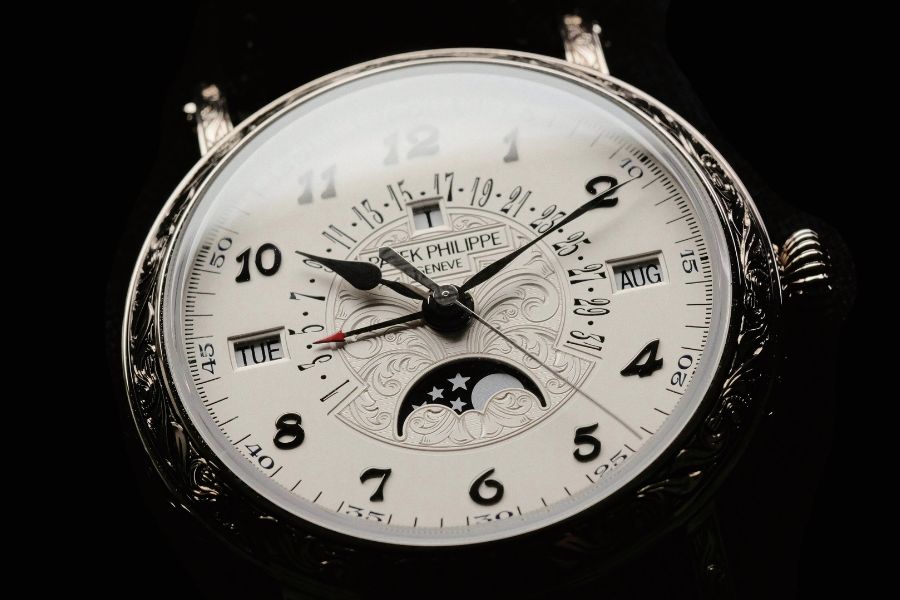
Understanding the distinctions between a Patek Philippe replica and an original is essential for any watch enthusiast or potential buyer. Known globally for unparalleled craftsmanship and timeless elegance, Patek Philippe watches are symbols of luxury and prestige — making the brand one of the most counterfeited in the world.
This guide goes beyond surface-level comparisons. It covers physical authentication, movement quality, investment value, legal consequences, and the real risks of replicas — giving you expert-level insight whether you’re a seasoned collector or a first-time buyer.
For professional authentication and valuation services, visit Vasco Assets.
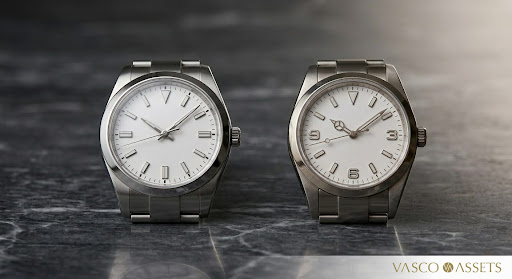
What Defines a Genuine Patek Philippe: Built-In Authentication
Authentic Patek Philippe watches carry a set of physical identifiers that counterfeiters consistently struggle to replicate with full accuracy.
Serial and Reference Numbers A key authenticity check is serial number placement. Genuine Patek Philippe watches have engraved serial numbers inside the case back or on interior edges (for transparent backs), never on the outer case back. Reference numbers sit between the lugs at 12 o’clock and must match the model exactly. According to authentication experts at G&G Timepieces, even sophisticated replicas frequently get these placements wrong.
Swiss Hallmarks and Precious Metal Marks Genuine Patek Philippe watches in gold or platinum carry legally required Swiss hallmarks: “750” for 18k gold, “950” for platinum, along with the PPCo maker’s mark. These marks are recognized under Swiss precious metal control laws and are applied with microscopic precision. According to Time 4 Diamonds, replicas either omit these entirely or replicate them poorly under close inspection.
Since 2009, Patek Philippe has applied its own strict internal quality certification — the Patek Philippe Seal — to every watch it produces, replacing the old Geneva Seal. This standard governs not just movement finishing but casing, dial quality, and after-sales service. No replica carries this certification, and no replica can be serviced under it.
Craftsmanship and Aesthetic Differences
The gap between an original and a replica becomes strikingly clear under close inspection of materials and finishing.
Genuine Patek Philippe watches use 18k gold, platinum, or high-grade stainless steel, sapphire crystal, and flawless gemstones, while replicas rely on lower-grade metals, mineral glass, and synthetic stones. As U.S. Customs and Border Protection (CBP) has noted in public seizure reports, counterfeit watches are often made with cheap metals that can cause skin reactions and break easily due to their lack of quality engineering.
Finishing
Authentic Patek Philippe cases feature flawlessly blended polished and brushed surfaces, applied by hand. Replicas often show inconsistent finishing, blurred transitions, and poorly defined edges.
Dial and Logo Precision
Original dials, indices, and logos are razor-sharp and perfectly spaced. Replicas may have blurred printing, uneven spacing, or misproportioned logos. The “Calatrava Cross” is a common failure point.
Weight and Feel
Genuine Patek Philippe watches use high-density metals for a substantial, balanced feel. Replicas often feel lighter due to hollow parts or inferior alloys.
Mechanical Excellence: What Replicas Can’t Copy
The movement is the soul of any watch, and it is where the gulf between genuine and fake is most profound.
In-House Calibres Patek Philippe produces its own movements entirely in-house. Iconic calibres like the Calibre 240 (ultra-thin automatic) and the 29-535 PS (used in the Calatrava) represent the culmination of decades of research. These movements operate at 28,800 vibrations per hour, producing the characteristic smooth, uninterrupted sweep of the second hand — not the jerky tick-tick motion of a cheaper movement.
Movement Finishing According to authentication specialists at G&G Timepieces, genuine Patek Philippe movements display Côtes de Genève (Geneva stripes), perlage (circular graining on plates), hand-chamfered edges, and mirror-polished screws — not blued screws, which Patek explicitly avoids unlike many other Swiss brands. Replicas often show machine marks, rough surfaces, visible gaps between components, and irregular bridges.
Complications On genuine watches, complications — perpetual calendars, moon phases, chronographs — function with precision and silky resistance. On replicas, these mechanisms are frequently sticky, imprecise, or cosmetic only. Even when functional, they lack the long-term reliability of a true in-house complication.
Why Serial Checks Alone Don’t Guarantee Authenticity
Verifying a serial number alone doesn’t authenticate a Patek Philippe. Counterfeiters can copy numbers, creating “frankenwatches” from mixed parts. Full authentication requires physical inspection, document checks (archives, warranty, box, receipts), and expert evaluation. Watches in pristine condition with full documentation can command a premium of 10–15% or more over the same reference without papers, according to market data from TPT Timepiece Trading.
Quick Checklist: Spotting a Replica vs. Authentic
Use these practical checks as a starting point — not a substitute for professional appraisal:
- Serial number location: Engraved inside the case back only — never on the exterior
- Swiss hallmarks: Look for “750” (18k gold) or “950” (platinum) and the PPCo maker’s mark
- Logo sharpness: Crisp, perfectly proportioned Patek Philippe text and Calatrava Cross
- Second-hand motion: Smooth, continuous sweep — not a stepping or jerking tick
- Movement finish: Geneva stripes, perlage, and polished (not blued) screws
- Weight: Substantial and balanced due to high-density metals
- Dial quality: Even spacing, no bleeding ink, sharply defined indices
- Case finishing: Seamless blend of brushed and polished surfaces
- Complications: Smooth, precise resistance — not stiff or cosmetic
- Documentation: Box, papers, warranty card, and ideally an archive extract from Patek Philippe
Note: High-quality “superclone” replicas have improved visual accuracy significantly in recent years, making superficial checks less reliable. When significant money is involved, always seek expert appraisal.
Price Differences: Originals vs. Replicas
Understanding the price gap is fundamental to understanding why the replica market exists — and why it is dangerous.
Genuine Patek Philippe Watches Cost Entry points into the Patek Philippe world begin around $12,000–$20,000 in the pre-owned market for vintage quartz Twenty~4 or manual-wind Calatrava references. Modern references from authorized dealers typically start well above $30,000, with iconic models commanding far more. According to Bob’s Watches, the most expensive Patek Philippe ever sold — the Grandmaster Chime Ref. 6300A — achieved $31 million at the Only Watch charity auction in 2019.
Replicas Cost Replicas are sold anywhere from $50 to several hundred dollars for so-called “superclone” versions. The price difference is not a bargain — it reflects the complete absence of the craftsmanship, materials, and intellectual property that defines the genuine article.
Investment and Resale Reality
One of the most compelling reasons to choose an original over a replica is financial. Genuine Patek Philippe watches are among the strongest-performing tangible investments in the luxury market.
Originals Appreciate According to data from G&G Timepieces, iconic models like the Nautilus and Aquanaut have seen their market values appreciate significantly over time, with some references trading at multiples of their original retail price. The discontinued Nautilus 5711/1A, which originally retailed below $35,000, now trades close to $95,000–$100,000 on the secondary market — nearly triple its original price, according to Watch Your Wrist. Gray & Sons Jewelers note that certain vintage and discontinued models have outperformed traditional investment vehicles like stocks and bonds over the past several decades.
Patek Philippe’s strict production limits — the company has produced fewer than one million watches in total since 1839, according to Global Boutique — mean that supply consistently trails demand, underpinning long-term value.
Replicas Have Zero Resale Value Replicas cannot be legally resold as genuine, carry no provenance, and are worth essentially nothing on any legitimate secondary market. Any money spent on a replica is lost entirely.
Legal and Ethical Consequences
The legal landscape around counterfeit watches is clear — and the risks are real.
U.S. Law and Government Enforcement U.S. Customs and Border Protection (CBP) states directly that purchasing counterfeit goods is illegal, and that importing counterfeit merchandise — even for personal use — may result in civil or criminal penalties. CBP actively seizes counterfeit watches at U.S. borders. In one Chicago enforcement action alone, CBP officers seized 516 counterfeit watches — including Patek Philippe pieces — with a combined estimated MSRP of over $9.22 million.
Criminal Penalties for Trafficking According to legal analysis compiled by Hirsch Law Group, knowingly trafficking counterfeit goods can result in fines up to $2 million and up to 10 years in prison for first-time offenders under federal law. If counterfeit goods cause serious bodily injury or involve military goods, penalties escalate to $5 million and 20 years.
Ethical Dimensions The American Watchmakers-Clockmakers Institute (AWCI) has documented that counterfeit watch production is frequently linked to exploitative labor practices, including child labor in unregulated manufacturing facilities. Beyond legal risk, purchasing replicas financially supports these operations. CBP has also warned that buying from counterfeit websites can expose consumers to malware, data theft, and financial fraud.
Secure Your Investment With Authenticity
Investing in an original Patek Philippe offers unmatched craftsmanship, generational value, and the prestige that only genuine luxury can provide. The differences between a replica and an original span every dimension — materials, mechanics, legality, investment potential, and ethical standing.
For those looking to buy, sell, or leverage a genuine Patek Philippe watch, Vasco Assets provides expert valuation, authentication services, and asset-backed loan options. Our team ensures your timepiece is assessed accurately and handled with the care it deserves.
Visit us at 2024 Quail St, Newport Beach, CA 92660, or call +1 (949) 593-6125 to discuss how to maximize the value of your luxury assets.
FAQs:
Can I tell if a Patek Philippe is fake just by looking at it?
High-quality replicas can be hard to spot visually. Signs include inconsistent logos, incorrect serial placement, irregular dial printing, or a ticking second hand. For certainty, consult a professional appraiser.
Is it illegal to buy a Patek Philippe replica for personal use?
Yes. U.S. law prohibits importing or purchasing counterfeit goods, even for personal use, with potential fines or imprisonment.
How do I verify the authenticity of a pre-owned Patek Philippe?
Verification requires physical inspection (serial placement, hallmarks, movement finishing), documentary checks (warranty card, box, receipts), and professional evaluation. Patek Philippe archives can confirm provenance and sale date.
Do Patek Philippe replicas hold any resale value?
No. Replicas cannot be legally resold as genuine and have no recognized secondary market value.
What is a “frankenwatch” and should I be concerned about it?
A frankenwatch is assembled from parts of multiple watches, some genuine, some not, to deceive buyers. Serial verification alone is insufficient; full inspection is necessary.
Why are Patek Philippe watches so expensive?
Pricing reflects hundreds of hours of in-house craftsmanship, hand assembly, and finishing, combined with extremely limited production (fewer than one million watches since 1839), sustaining demand and long-term value.