
Sell Estate Jewelry: Private Appraisals for Valuable Collections
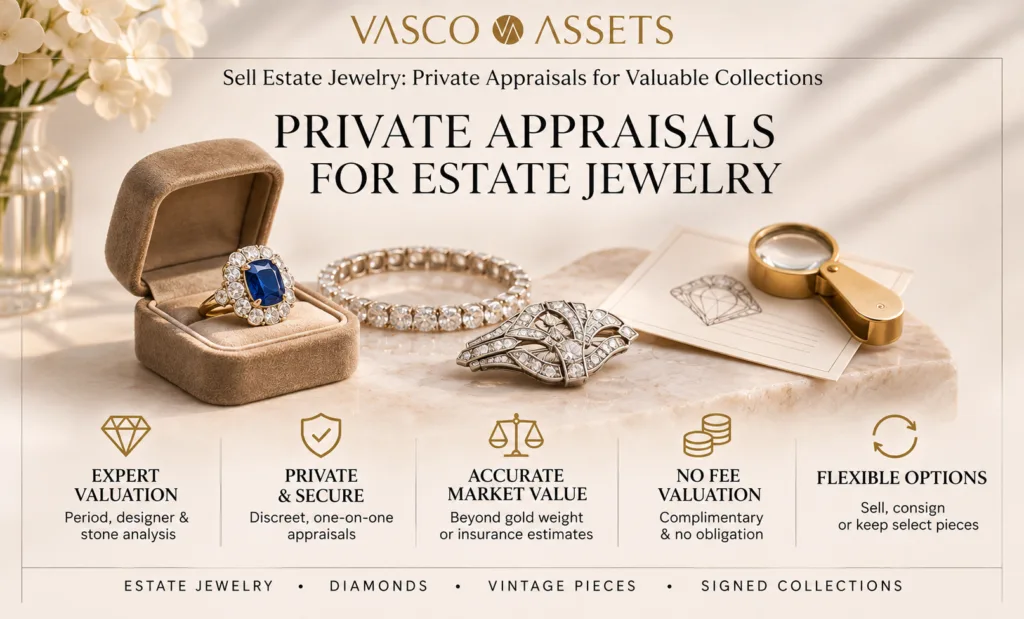
The velvet box has been sitting in a closet since the estate was settled. Inside are a sapphire brooch, a few signed bracelets, and a ring nobody in the family can quite date. You suspect some of it is valuable, but you have no idea which pieces, how much they’re worth, or who to trust with something so personal.
That uncertainty is exactly where a private appraisal earns its keep. Vasco Assets, a licensed and bonded luxury asset firm in Newport Beach, offers complimentary, no-obligation TruValue valuations conducted one-on-one by specialists who handle fine and vintage jewelry daily. Before you sell a single piece, you’ll understand what the collection holds, what it could bring, and which items might be worth keeping.
What Makes Estate Jewelry Worth More Than Its Gold Weight?
Many buyers price inherited jewelry by weighing the metal and estimating the stones. That approach ignores everything that makes estate pieces special. Period design from the Art Deco, Edwardian, or Retro eras, hand-finished craftsmanship, and signatures from renowned houses can push a piece’s value well beyond its melt price. A scale can’t measure any of that.
Stones tell their own story. Older hand-cut diamonds, such as Old European and old mine cuts, attract collectors who prize their character, while untreated colored gemstones can command premiums over modern equivalents. One Vasco client learned that a small, outdated heirloom held an exceptionally rare diamond, and it ultimately sold for $180,000. Appearances rarely reveal true worth.
How Much Will a Buyer Pay for Estate Jewelry?
Buyers build offers by examining precious metal content, gemstone quality, designer signatures, condition, and comparable resale prices. Yet a piece’s estimated market value isn’t necessarily what a buyer can pay on the spot. Professional buyers must account for authentication, selling expenses, and market risk. An old insurance appraisal, which estimates retail replacement cost, usually sits higher still.
The Internal Revenue Service (IRS) defines fair market value as the price a willing buyer and seller would agree on when neither is under pressure to close the deal. An immediate cash offer differs because it reflects resale costs and profit margin. Likewise, the Gemological Institute of America (GIA) separates gemstone grading from monetary appraisal, since accurate identification alone doesn’t set a selling price.
Example: Calculating an Estate Jewelry Cash Offer
Consider an inherited diamond ring with an estimated secondary-market resale value of $8,000. These figures are hypothetical and do not represent verified industry averages or actual Vasco Assets offers.
| Valuation Component | Illustrative Amount |
| Comparable secondary-market resale value | $8,000 |
| Expected selling expenses | −$600 |
| Authentication or servicing | −$200 |
| Buyer margin and market risk | −$1,200 |
| Illustrative cash offer | $6,000 |
Here, the buyer offers 75% of the estimated resale value, with the remaining 25% covering expenses, price fluctuations, and operating margin. Before accepting any offer, request an itemized explanation of the valuation, and Vasco’s specialists will walk you through how each figure was reached. Comparing qualified buyers helps confirm the price reflects your jewelry’s condition, provenance, and current demand.
Why Private Appraisals Suit Valuable Collections
Walking an heirloom collection into a busy retail counter invites rushed evaluations and an audience. A private appraisal reverses that dynamic. You meet in a secure setting, each piece receives individual attention, and conversations about family history, provenance, and sentimental items stay confidential, which matters when relatives are still deciding what to keep.
Privacy also protects value. Collections listed publicly on marketplaces or auction sites can sit unsold, attract scams, or lose leverage after a failed sale. Working with a firm that sells to industrial buyers and accredited investors lets you evaluate offers quietly. Clients outside Southern California can use Sure Secure Shipping to send pieces for review.
Inside a Vasco Estate Jewelry Evaluation
Vasco’s appraisal begins with the fundamentals: identifying the metals, gemstones, and construction that set a piece’s baseline value. Specialists then establish provenance by pinpointing the era and, where possible, the designer, since attribution can add significant value. The firm’s certified diamond buyers grade stones individually rather than applying one generic estimate to the entire lot.
Throughout the process, Vasco uses scientific testing methods to authenticate materials, an important safeguard in a market crowded with convincing counterfeits. You receive a clear breakdown of each item’s market price based on its design and historical significance. There is no fee for the valuation and no pressure to accept an offer once you see the numbers.
How to Prepare Your Collection Before the Appointment
A little organization can raise your final offer. Gather original boxes, pouches, and accessories, since Vasco has noted it may offer up to 20% more for estate pieces presented in original packaging. Certificates of authenticity, purchase invoices, prior appraisals, and family records that trace ownership all strengthen provenance and help separate genuine pieces from reproductions.
Resist the urge to polish or repair anything first. Aggressive cleaning can strip patina, loosen old settings, or damage delicate stones, and restoration may reduce collector appeal. Instead, store each piece separately to prevent scratches, photograph the collection for your records, and flag any items you’re undecided about so they can be discussed privately.
Sell, Consign, or Borrow: Choosing Your Path
Once the appraisal is complete, you decide how to move forward. If you’re ready to sell, Vasco can purchase pieces outright with no listings, commissions, or waiting periods, and same-day payment is available once you accept an offer. For rare signed or exceptional items, consignment services may help reach collectors willing to pay a premium.
Not ready to let go? Pieces valued at $2,500 or more may qualify for a collateral loan with terms from 30 to 120 days and negotiable rates generally between 2% and 10%. You access funds while retaining ownership. Schedule your private appraisal online or call 949.674.3575 to explore every option before committing.
Honor the Collection, Maximize the Return
Estate jewelry carries both history and value, and selling it deserves more care than a quick scale-and-cash transaction. It deserves an expert who appreciates both. A private appraisal reveals what each piece truly offers, clarifies which figures matter for your goals, and gives your family the confidence to make decisions together without pressure.
Vasco Assets combines certified expertise, scientific authentication, and discreet one-on-one service to help you get full value from inherited collections. Whether you sell everything, keep a few treasured pieces, or borrow against them, the journey starts with knowing what you have. Request your complimentary TruValue valuation and let a specialist uncover your collection’s worth.
Frequently Asked Questions
Is a free appraisal really free, or is there a catch?
It’s genuinely free. Vasco Assets offers TruValue valuations at no cost and with no obligation, whether or not you choose to sell, consign, or borrow. You receive a professional assessment of your pieces and can take time to consider the figures, consult family members, or compare other offers before making any decision.
Should I sell the whole collection at once or piece by piece?
It depends on the collection. Selling everything together offers convenience and can be efficient for estates with many items. Separating standout signed or rare pieces, however, may achieve stronger prices through targeted buyers or consignment. During your appraisal, a specialist can identify which items deserve individual attention and which make sense to sell as a group.
How can I tell if my estate jewelry is real or costume?
Hallmarks, metal stamps, and designer signatures offer clues, but they can be faked or worn away over decades of use. Professional testing is the only reliable way to confirm metal purity and gemstone authenticity. Even pieces that look like costume jewelry deserve a second look, since valuable items are sometimes overlooked in mixed jewelry boxes.
Do I need paperwork to sell inherited jewelry?
Paperwork isn’t always required, but certificates, invoices, and prior appraisals help establish authenticity and provenance, which can raise your offer. If you’re selling on behalf of an estate, be prepared to show you have the authority to do so. Valid identification is typically requested as part of any sale, so bring it to your appointment.
Can I sell estate jewelry if I live outside California?
Yes. Vasco Assets works with clients well beyond Newport Beach. Through its Sure Secure Shipping program, you can send pieces for evaluation without traveling. You can also start online by uploading images and documentation of your collection, giving specialists a preliminary look before your pieces arrive and helping the process move efficiently.
What types of estate jewelry are most valuable?
Signed pieces from renowned design houses, period jewelry from sought-after eras, large or untreated gemstones, and natural pearls tend to draw the strongest interest. Platinum and high-karat gold settings add intrinsic value as well. Condition, originality, and documentation also play major roles, which is why two similar-looking pieces can appraise very differently.
Can I keep some pieces and sell others?
Absolutely. Many families sell select items while keeping sentimental heirlooms or dividing pieces among relatives. A full appraisal helps here too, since knowing each item’s value makes it easier to divide a collection fairly. You’re never required to sell everything Vasco evaluates, and you can return later if your circumstances change.