
Where to Sell Loose Diamonds in Orange County | Vasco Assets
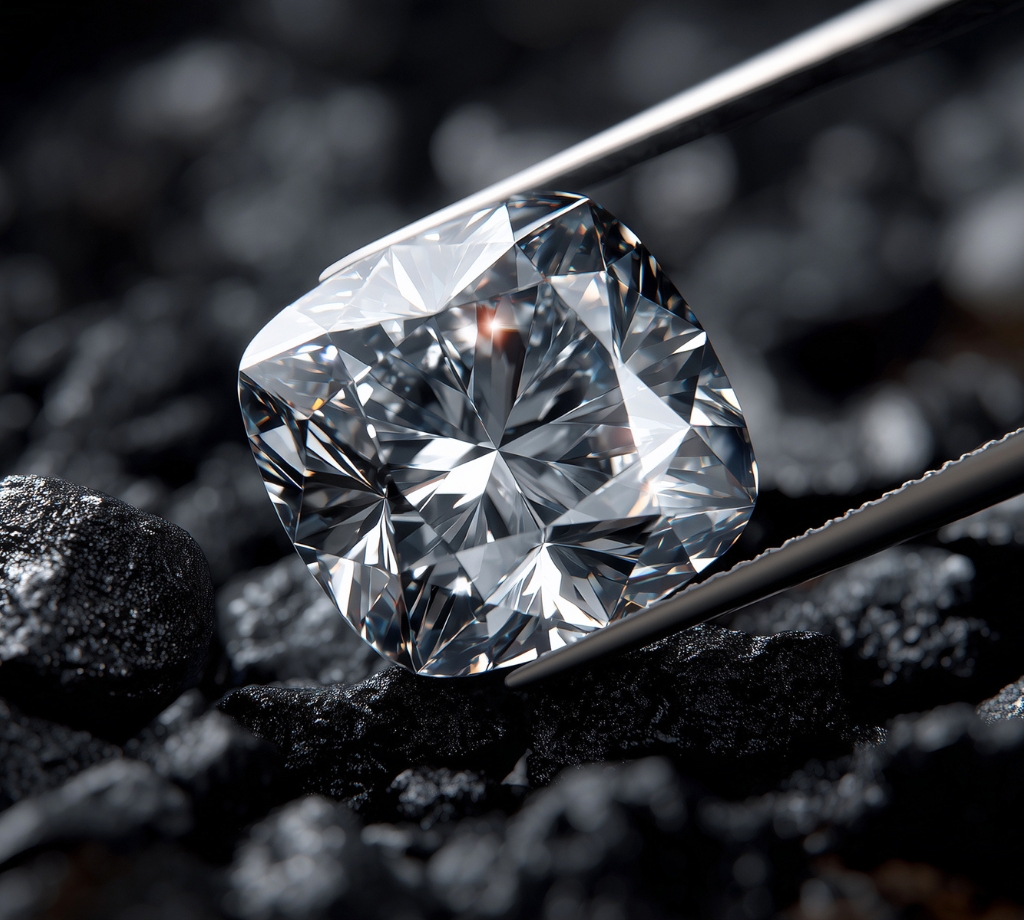
Loose diamonds are harder to sell than mounted jewelry, mostly because fewer buyers know how to evaluate them without the context of a setting. If you’re holding investment stones, inherited loose diamonds, or leftover stones from a redesign, finding a buyer in Orange County who actually understands grading reports and current market value matters more than finding one that’s simply nearby and willing to make an offer.
Vasco Assets is a licensed and bonded luxury asset buyer based in Newport Beach, with certified diamond buyers on staff specifically to evaluate and purchase loose stones at accurate market prices, rather than guessing based on appearance alone.
Why Loose Diamonds Are Harder to Sell Than Mounted Jewelry
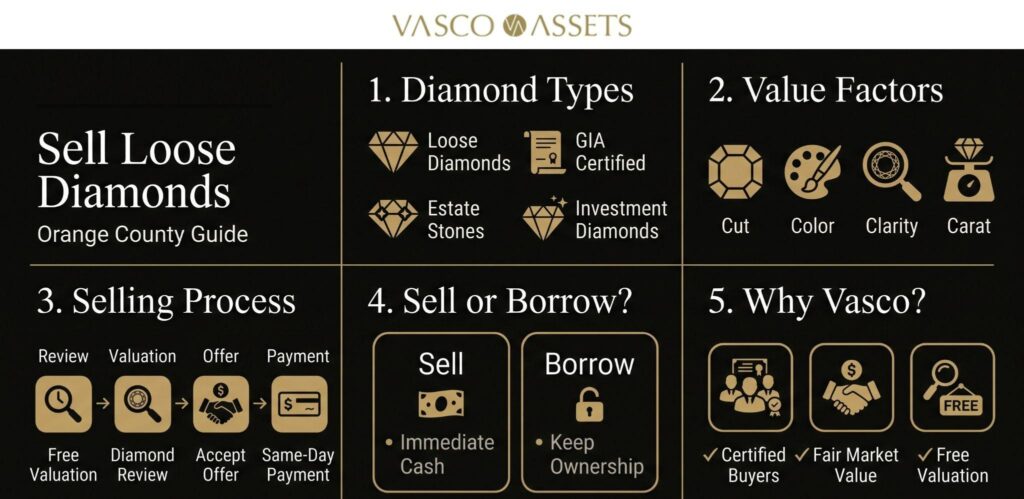
A mounted diamond in a ring or necklace gives a buyer visual and financial context — brand, craftsmanship, metal weight — that a loose stone doesn’t offer. Without a setting, the diamond’s value rests entirely on its own characteristics: cut, color, clarity, and carat weight, along with any certification that backs those grades up. There’s no surrounding piece to lean on for a quick estimate.
This is exactly why many general jewelry stores and pawn shops undervalue loose diamonds. They’re used to appraising finished pieces, not assessing a stone purely on its own grading merits, which means an inexperienced buyer is more likely to lowball a loose diamond than a mounted one, simply because they don’t have the training to read it correctly on its own terms.
What Makes a Buyer Qualified to Purchase Loose Diamonds
A buyer capable of accurately pricing a loose diamond needs to understand grading reports, recognize certification from labs like GIA, and know current market pricing for that specific combination of cut, color, clarity, and carat. Without that expertise, an offer is really just a guess dressed up as an appraisal.
Vasco Assets staffs certified diamond buyers specifically for this reason, ensuring loose stones are assessed against real grading criteria rather than a rough visual estimate. That certification is what separates a buyer capable of paying fair market value from one that isn’t, and it’s worth confirming before you hand a stone over for evaluation anywhere.
How Much Is My Loose Diamond Worth? Value Calculator
One of the biggest challenges when selling a loose diamond is understanding what it’s actually worth before accepting an offer. Many buyers simply say that value depends on the “4Cs,” but that explanation alone doesn’t tell sellers how different factors influence the final price. A loose diamond’s value is determined by a combination of measurable characteristics, market demand, and the quality of the documentation supporting the stone.
| Diamond Profile | Factors That Influence Value |
| 1-carat diamond | Cut quality, color, clarity, certification |
| 2-carat diamond | Rarity, proportions, market demand |
| GIA-certified diamond | Verified grading and buyer confidence |
| Estate diamond | Age, condition, documentation |
Carat weight is only one part of the equation. Two diamonds with the same carat size can have significantly different values depending on their cut quality, color grade, clarity characteristics, fluorescence, shape, certification, and current buyer demand. A well-cut diamond with strong grading may command a higher offer than a larger stone with lower overall quality, which often surprises sellers who assume size is everything.
The Gemological Institute of America (GIA) explains that diamond grading reports provide an objective evaluation of important characteristics, including the 4Cs — cut, color, clarity, and carat weight — and these reports also include additional identifying details that help buyers and sellers verify the specific stone being evaluated. That verification matters just as much as the grades themselves, since it confirms the report actually belongs to the stone in question.
For example, a GIA-certified one-carat diamond with excellent cut and strong clarity may be valued differently than an uncertified one-carat diamond of similar size but less documented quality. Likewise, an inherited estate diamond may require additional evaluation to determine its current market value, since older stones weren’t always cut to today’s standards and may need a fresh look to establish where they land. For anyone searching “how much is my loose diamond worth,” “diamond value calculator,” or “sell loose diamond near me,” the most accurate answer comes from evaluating the individual stone — not just its carat weight — with a buyer who understands diamond grading and current market conditions.
Selling vs. Using Loose Diamonds as Collateral
Selling isn’t the only path if you own valuable loose diamonds. If you’d rather retain ownership while still accessing cash, a collateral loan or a LuxLoc line of credit lets you pledge the stones instead, provided they’re valued at $10,000 or more. LuxLoc offers a loan-to-value ratio of up to 80%, so a collection of loose diamonds appraised at $50,000 could unlock a credit line near $40,000 while you keep the stones and eventually reclaim them once the balance is repaid.
| If you want… | Better option |
| Maximum cash today, no attachment to the stones | Sell the diamonds |
| To keep and eventually reclaim the diamonds | LuxLoc credit line or collateral loan |
| A quick, one-time transaction | Sell the diamonds |
| Flexible, ongoing access to capital | Secured line of credit |
Investors holding loose diamonds as a long-term asset often lean toward pledging them, while those simply looking to liquidate typically prefer an outright sale and a clean break from the stone.
How the Selling Process Works
Selling loose diamonds through Vasco Assets typically starts with a free online valuation. You provide details about the stone — carat weight, grading report if available, and any relevant documentation — and receive an initial estimate before deciding whether to move forward with anything further.
From there, a physical inspection confirms the TruValue of the diamond, and once you accept the offer, payment is typically issued the same day. For sellers who’d rather not travel in person, Sure Secure Shipping provides an insured way to send loose stones in for evaluation without the risk of handling shipping arrangements yourself.
What to Bring When Selling a Loose Diamond
Bringing the right documentation can meaningfully improve your offer. A GIA grading report is the single most valuable piece of paperwork, since it removes guesswork from the evaluation and gives the buyer an objective starting point rather than a visual estimate. Any original purchase receipts, appraisals, or prior certification updates also help establish the stone’s history and support a stronger valuation overall.
If you don’t have certification, a qualified buyer can still evaluate the stone directly, though the process may take slightly longer since the buyer needs to assess the 4Cs firsthand rather than confirming against an existing report. Either way, a reputable buyer should walk you through exactly how they arrived at their number, rather than presenting a figure with no explanation attached.
Why Estate and Inherited Stones Need Extra Attention
Estate diamonds and inherited loose stones present a slightly different challenge than a recently purchased diamond. Older cuts, such as an old European or old mine cut, don’t always align with modern grading expectations, and the stone may not come with any accompanying paperwork at all. That doesn’t mean the diamond lacks value — it just means it needs a more hands-on evaluation.
A buyer experienced with estate pieces will know how to assess an older cut on its own merits rather than penalizing it simply for not matching a modern grading report. If you’ve inherited loose diamonds and have no documentation to go along with them, it’s worth seeking out a buyer who explicitly mentions experience with estate jewelry, since that background often translates into a more accurate and fair valuation for pieces with an unclear history.
Take the Next Step
If you own loose diamonds and want to know their actual market value, the fastest way to find out is a free valuation. Vasco Assets, a licensed and bonded investment firm based in Newport Beach, CA, employs certified diamond buyers who assess loose stones accurately, rather than guessing based on appearance alone.
There’s no cost to get a valuation, and no obligation to sell once you have it. Reach out today and see what your loose diamonds could be worth in today’s market.
Frequently Asked Questions
Where can I sell loose diamonds in Orange County?
Vasco Assets, based in Newport Beach, CA, employs certified diamond buyers specifically equipped to evaluate and purchase loose stones at fair market value.
Do I need a grading report to sell a loose diamond?
No, but a report from a recognized lab like GIA typically speeds up the process and can support a stronger offer, since it removes uncertainty about the stone’s characteristics.
How is the value of a loose diamond determined?
Value depends on the 4Cs — carat weight, color, clarity, and cut — along with certification and current market demand for that specific combination of characteristics.
Can I sell loose diamonds without visiting in person?
Yes. Sure Secure Shipping allows sellers to ship loose diamonds in securely for evaluation.
How fast will I get paid after selling my loose diamonds?
Once you accept an offer following the in-person inspection, payment is typically issued the same day.
Can I borrow against loose diamonds instead of selling them?
Yes. A collateral loan or a LuxLoc line of credit lets you pledge loose diamonds as security, provided they’re valued at $10,000 or more, while you retain ownership.
Is there a cost to get my loose diamonds valued?
No. Valuations are free and come with no obligation to sell.