
Sell a Hublot Watch: Maximizing Value Through Luxury Appraisal
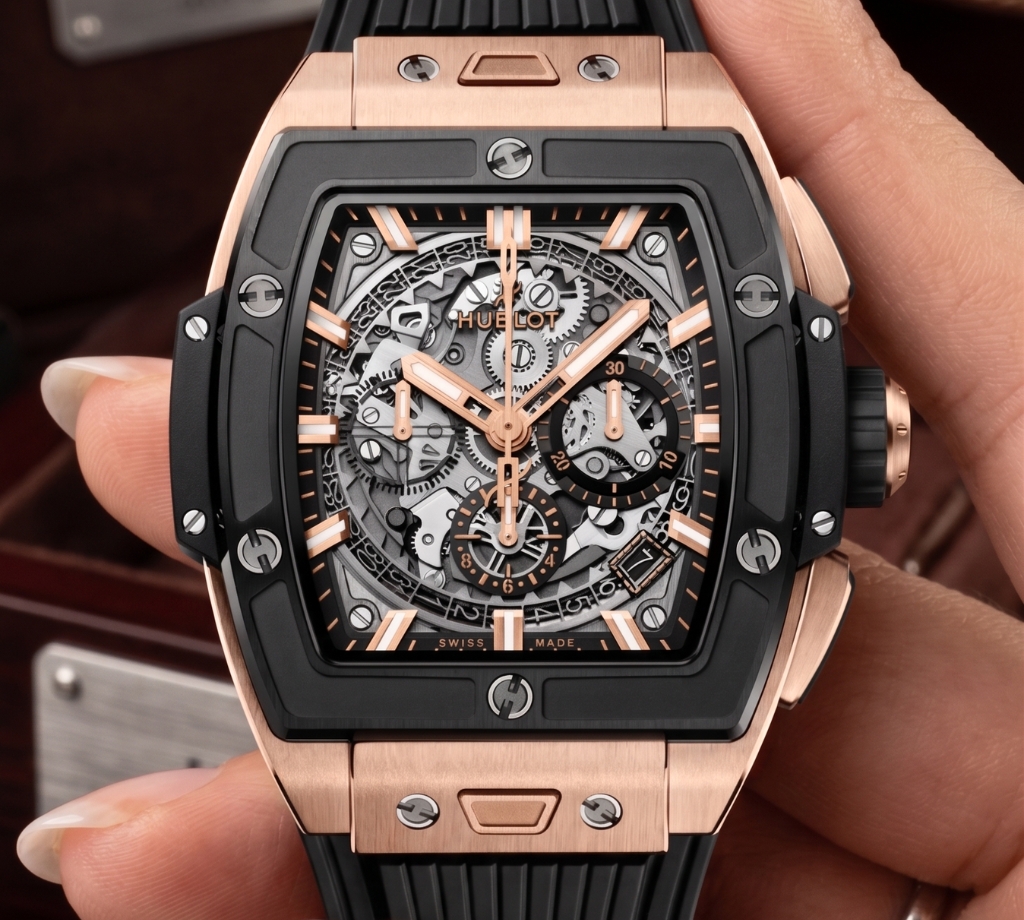
You own a Hublot — a Big Bang, a Classic Fusion, a Spirit of Big Bang, or perhaps a limited collaboration that has held its value better than the standard catalog. You are ready to sell or borrow against it, and you need to know what it is genuinely worth before you engage with any buyer or lender.
Vasco Assets offers private luxury watch acquisitions and collateral loans against high-end timepieces, providing certified appraisals, immediate capital, and outcomes that reflect genuine secondary market conditions — not the blanket dismissals that generalist buyers apply to Hublot across the board.

Hublot’s Position in the Secondary Market
A Brand Where Reference Selection Defines Outcome
Hublot occupies a distinctive and often misunderstood position in the secondary market. Founded in 1980 and acquired by LVMH in 2008, its “Art of Fusion” approach to materials has made it highly recognizable in modern horology. However, its resale performance is highly reference-dependent, and blanket assumptions about universal value loss overlook important exceptions supported by secondary market data.
Which References Outperform
The Big Bang Unico leads Hublot’s collector market, with limited editions like the Berluti Scritto trading at 115–125% of retail and the Sang Bleu at 95–110%. The Spirit of Big Bang retains 60–70% of retail and can reach $20,000+ in rare configurations. Standard Unico models trade around 95–115%, while Classic Fusion references typically settle between $3,000 and $7,500, reflecting weaker retention due to less differentiated movements.
The Depreciation Divide
Standard production Big Bang and Classic Fusion models with third-party movements show 40–60% value retention. Limited collaborations with Ferrari, Berluti, and Sang Bleu, and select pieces from the MP Collection, occupy a fundamentally different position. Understanding which category your specific Hublot occupies is the most important variable before any sale or loan negotiation — and it is the first question a specialist appraisal from Vasco Assets will resolve.
The Hublot Liquidity Spectrum: Why One Depreciation Rate Is Wrong
A Static Percentage Misses the Real Mechanism
Most Hublot resale content repeats the same static claim: that the brand loses 30–50% of value, with occasional notes that Big Bang models hold value better than Classic Fusion. This framing reduces a complex secondary market into a single depreciation percentage, as if all references share the same pricing behavior. In practice, that assumption is misleading because it ignores how differently individual Hublot references move through the market.
The More Accurate Model Is a Liquidity Spectrum
The more accurate model is not a resale rate — it is a liquidity spectrum. Hublot does not trade as a single asset class with one predictable outcome. It behaves as a collection of references that clear at different speeds depending on buyer depth, production volume, and collector demand. In this framework, value is not just about price level, but about how quickly a reference can convert into cash without aggressive discounting.
Three Tiers of Clearing Speed
At the top of the spectrum are fast-clearing micro-markets — Big Bang Unico skeletons, Ferrari collaborations, and high-profile limited editions — where scarcity and brand recognition compress bid-ask spreads. In the middle sit moderate-liquidity references like the Spirit of Big Bang, where demand exists but turnover is slower and more selective. At the lower end are slow-absorption assets such as standard Classic Fusion models, where thinner buyer pools and weaker movement differentiation extend time-to-sale and widen discounts.
The Question That Actually Matters
This reframes the core question entirely. Instead of asking how much a Hublot loses in value, the more accurate question is: how quickly does this specific reference clear in the secondary market under real liquidity constraints? Bank for International Settlements research confirms that in dealer markets, price outcomes are strongly tied to liquidity depth and time-to-exit dynamics rather than fixed valuation bands. Federal Reserve analysis similarly shows that market frictions and limited depth directly influence realized transaction prices — meaning urgency and reference-specific buyer pool depth are primary pricing forces, not secondary considerations.
Why Hublot Depreciation Is a Mechanism, Not Just an Outcome
Dealer Absorption Capacity Explains the Discount
Hublot depreciation is driven less by weak demand than by fragmented liquidity at the reference level, where buyer pools, turnover speed, and dealer risk create different price floors. Dealers actively manage inventory costs, so every watch ties up capital, storage, and resale capacity. Slow-moving Classic Fusion models increase friction and widen discounts, while limited Big Bang Unico collaborations with faster turnover support tighter pricing.
Discounts Are the Pricing of Time and Risk
For Hublot’s standard production references — which move more slowly than Rolex or Audemars Piguet — dealer holding costs are baked into the discount before any negotiation begins. Seen through this lens, Hublot’s secondary market discounts are not deviations from value. They are the pricing of storage, time, and limited absorption capacity for each specific reference. Understanding this mechanism transforms the selling decision from passive acceptance of a low offer into an informed negotiation — and it is why choosing a specialist like Vasco Assets over a generalist matters so significantly for Hublot sellers.
Should You Sell Your Hublot or Borrow Against It?
When Selling Is the Right Move
Selling makes the most sense when the need for capital is permanent, when the watch no longer fits your collection, or when a limited edition has reached a secondary market peak you wish to lock in before further softening. For those who have moved on from the piece, a private acquisition through Vasco Assets delivers immediate, final liquidity — with a certified appraisal ensuring the price reflects real reference-level conditions rather than a generalist’s blanket Hublot discount.
The Tax Dimension
Before completing a sale, tax implications deserve consideration. The IRS classifies collectibles — including luxury watches sold at a gain — as subject to a maximum federal capital gains rate of 28% on long-term gains. For a limited edition or collaboration Hublot that has appreciated above retail, the net proceeds after tax may be meaningfully lower than the headline sale price. A tax professional should be consulted before completing any significant transaction.
When a Collateral Loan Is Smarter
If you still value the piece and your capital need is short-term, a collateral loan from Vasco Assets may preserve more long-term value. Loan terms run 30 to 120 days with no credit check required, and your Hublot is stored securely and returned in full upon repayment. For those considering securities-backed credit as an alternative, the Financial Industry Regulatory Authority (FINRA) cautions that these facilities carry risks including potential forced liquidation if portfolio values decline — a risk that a watch-backed loan does not carry.
What to Avoid When Selling a Hublot
Generalist Buyers Who Apply Blanket Discounts
Generalist buyers and pawn shops apply broad Hublot discounts without differentiating between a standard Classic Fusion and a limited-edition Big Bang Unico Berluti that is trading above retail. They cannot price reference-specific liquidity, collaboration provenance, or movement generation — which means sellers consistently receive offers anchored to the worst-performing end of the Hublot catalog regardless of what they actually own. For a collector-grade reference, that gap can represent tens of thousands of dollars.
Platform Fees That Erode Net Proceeds
Peer-to-peer platforms introduce counterparty fraud, authentication risk, and fee structures that quietly reduce what you receive. eBay’s final value fees for luxury watches run from 5.5% to 7.8% on high-value transactions — before shipping, insurance, and the time cost of managing a listing. A private acquisition through Vasco Assets removes all of that friction, delivering a clean, direct transaction at a certified, market-accurate price.
Vasco Assets: Private Hublot Acquisition and Expert Lending
Reference-Level Expertise Across the Catalog
Vasco Assets is a private international investment firm based in Newport Beach, California, with certified expertise across luxury watches, jewelry, diamonds, gold, and rare collectibles. Their appraisers follow Hublot’s secondary market actively — across Big Bang, Classic Fusion, Spirit of Big Bang, MP Collection, and collaboration references — ensuring every offer reflects the reference-specific liquidity conditions that determine real market outcomes.
Immediate Funding, No Friction
The process begins with a complimentary TruValue valuation. Once Vasco’s certified appraisers assess your Hublot, you receive a transparent, liquidity-adjusted offer based on actual market data. If you accept, payment is issued promptly — no commissions, no listing delays, no fraud exposure. Contact Vasco Assets or call 949.674.3575 to schedule your appraisal — no obligation, no pressure, and a result in as little as 24 hours.
FAQs
1. How does Vasco Assets determine the value of my Hublot?
Vasco Assets uses a certified TruValue appraisal process that accounts for the specific reference, movement calibre and generation, case material, collaboration status, condition, documentation, and current secondary market data. Whether your Hublot sits at the fast-clearing or slow-absorption end of the liquidity spectrum is a primary factor in how the offer is structured.
2. Why does a single depreciation percentage not describe Hublot’s secondary market accurately?
Hublot trades as a liquidity spectrum, not a single asset class. References clear at different speeds depending on buyer depth, production volume, and collector demand — from fast-clearing Big Bang Unico collaborations that compress bid-ask spreads, to slow-absorption Classic Fusion models where thinner buyer pools widen discounts. The right question is not how much a Hublot loses, but how quickly your specific reference clears under real liquidity constraints. A specialist appraisal from Vasco Assets answers that precisely.
3. Will I owe capital gains tax when I sell my Hublot?
Potentially. The IRS classifies collectibles — including luxury watches sold at a gain — as subject to a maximum federal capital gains rate of 28% on long-term gains. If your Hublot has appreciated, consult a tax professional before completing the sale to understand your net proceeds after tax.
4. Can I borrow against my Hublot instead of selling it?
Yes. Vasco Assets offers collateral loans against Hublot watches and other luxury timepieces, with loan terms of 30 to 120 days, no credit check required, and funds available in as little as 24 hours. Your watch is stored securely and returned in the same condition upon full repayment.
5. Does documentation affect the sale price of a Hublot?
Yes — significantly. A Hublot with its original box, warranty card, hang tags, and any collaboration documentation commands a measurable premium over an unpapered example of the same reference. Vasco’s appraisers factor every element of your watch’s presentation into the offer.
6. Why is a private sale through Vasco better than an online marketplace?
Online platforms charge final value fees of 5.5–7.8% on high-value watch transactions, introduce fraud risk, and require significant time to manage. Vasco Assets provides a direct, private acquisition with no fees, no fraud exposure, and payment issued promptly on agreement — with a certified appraisal ensuring the offer reflects genuine reference-level market value.
7. Can I sell other watches or luxury assets alongside my Hublot?
Yes. Vasco Assets acquires a broad range of luxury assets including other watch brands, fine jewelry, diamonds, gold, fine art, and rare collectibles. Multiple items can be evaluated together in a single confidential transaction, streamlining the process for sellers with broader collections.