
Where to Sell Loose Diamonds: Finding Reliable Buyers for Maximum Return

If you have a loose diamond sitting in a safe deposit box or an old ring setting you’ve long since removed the stone from, you’re probably wondering exactly who to trust with it. Loose diamonds are harder to sell than finished jewelry because there’s no brand name or retail markup to lean on, only the stone’s actual specifications and whoever is assessing them.
That’s exactly where the wrong buyer can cost you real money. Vasco Assets is home to certified diamond buyers who accurately assess the value of your stone and pay a reasonable market price, backed by a reputation built on over 100 five-star reviews.
Why the Right Buyer Changes Everything
A loose diamond’s true worth depends entirely on who is doing the grading. Two buyers looking at the exact same stone can land on very different numbers if one lacks proper certification training.
That gap is why finding a reliable, certified buyer like Vasco Assets matters more for loose diamonds than almost any other luxury asset category.
Understanding Today’s Loose Diamond Market
Diamond prices move in cycles, and 2026 has been a story of recovery after a rough stretch. The Rapaport Trade Diamond Index rose 4.2% for 0.30-carat diamonds in June 2026, up from a 2.1% gain in May, while the 0.50-carat index increased 1.3% and the 1-carat index dipped 0.7%.
Smaller Stones Are Recovering Faster
Smaller melee diamonds took the hardest hit over the past two years but are now showing the strongest rebound. The same index for 0.30-carat diamonds had dropped 27.6% year on year before beginning its 2026 recovery.
That volatility is exactly why getting a current, stone-specific appraisal matters more than relying on general market impressions from a year or two ago.
Why This Matters for Sellers
If you’ve been holding onto a loose diamond for years, its value today could be meaningfully different from what you remember it being worth at purchase. A knowledgeable buyer factors in current trade pricing, not outdated retail estimates.
This is one more reason a certified appraisal beats guessing based on an old insurance valuation or receipt.
Where You Can Actually Sell a Loose Diamond
Sellers typically have four realistic paths: local jewelers, pawn shops, online marketplaces, and certified luxury asset buyers. Each comes with real tradeoffs in price, speed, and trustworthiness.
Local Jewelers and Pawn Shops
Local jewelers often buy loose diamonds, but many are really evaluating them to resell as retail inventory, which limits what they can offer. Pawn shops move even faster but typically offer the lowest prices of any option, since their business model depends on buying well below resale value.
Online Marketplaces and Certified Buyers
Online marketplaces can connect you with more buyers, but they also expose you to scams, lowball bids, and the hassle of shipping a valuable stone to an unverified stranger. A certified, licensed buyer with an established reputation solves both problems by combining trained appraisal expertise with a legitimate, insured transaction process.
What Determines Your Loose Diamond’s Value
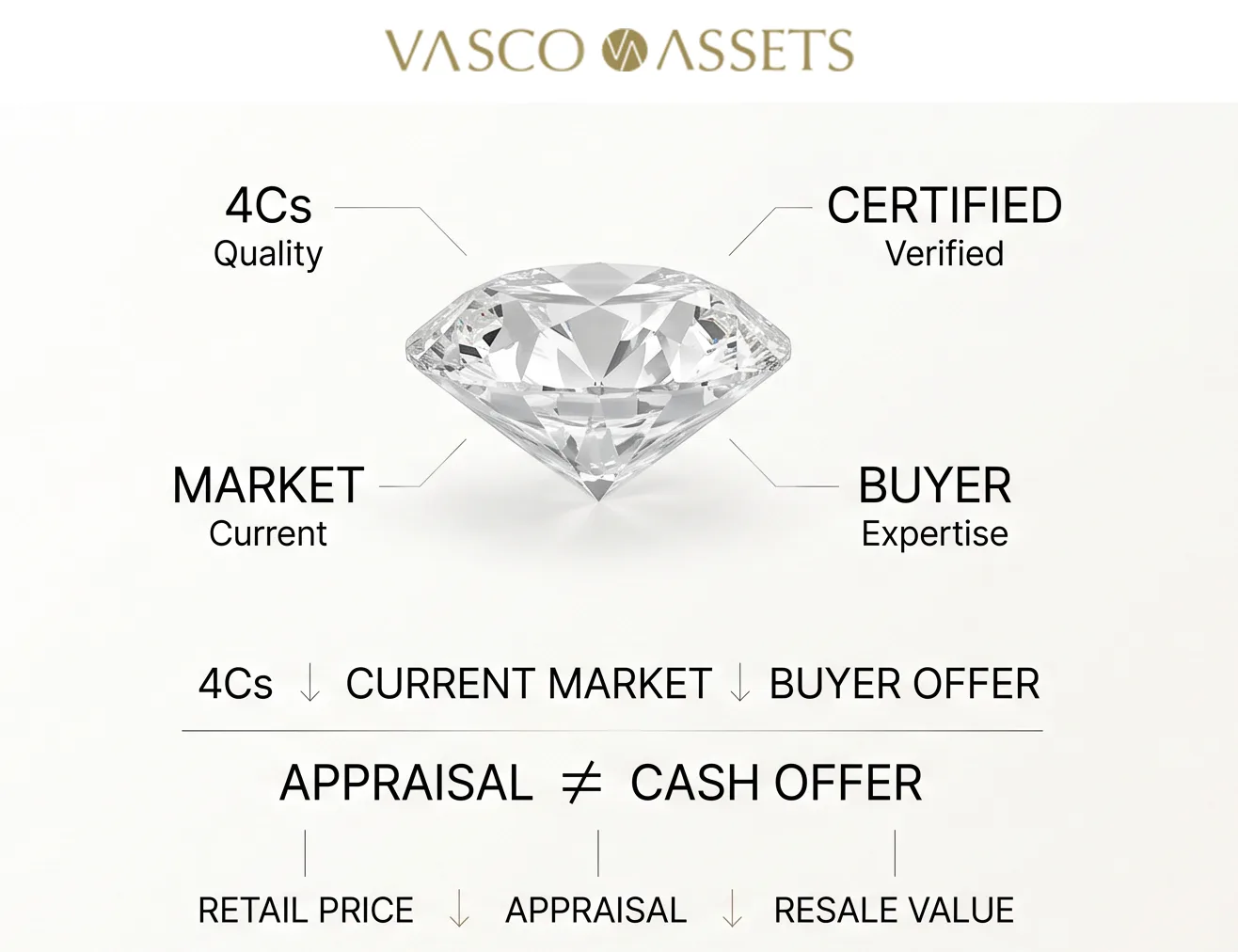
Every loose diamond is judged against the four Cs: carat weight, cut, color, and clarity. These factors interact with each other, so two diamonds with the same carat weight can have very different values depending on cut quality and clarity grade.
Certification Is Non-Negotiable
A GIA or equivalent certification matters enormously for loose diamonds specifically, since there’s no setting or brand to reassure a buyer of authenticity. Certified stones consistently command stronger offers because buyers can verify quality claims instead of relying on your word alone.
Does My Diamond’s Appraised Value Equal Its Resale Value?
Not necessarily. One of the most important distinctions to understand before selling a loose diamond is the difference between retail or appraised value and the amount a buyer can realistically offer you today. A diamond may have originally sold for $15,000, or carry an insurance appraisal citing a similar figure, without that number reflecting its current cash resale value.
The Real Path From Price Tag to Payout
It helps to think of value as a chain rather than a single fixed number: original retail price → appraisal or insurance value → current market conditions → buyer’s acquisition costs → actual cash offer. Each link in that chain can shift the final number in either direction.
What a GIA Report Actually Tells You
A GIA Diamond Grading Report provides important technical information about a stone’s identity and quality, including the 4Cs, but GIA reports offer technical information on the dimensions, quality, and identifying characteristics of a diamond, and while value may be determined from this information, no appraisal value is stated on the report itself.
What an Appraisal Actually Does
An appraisal serves a different purpose entirely. GIA describes an appraisal as a separate valuation of property, prepared by an independent appraiser who may use laboratory grading information as a starting point when determining monetary value.
Why This Matters When You Sell
For sellers, this means an old insurance appraisal should never be treated as a guaranteed selling price. A buyer has to weigh the diamond’s current characteristics, present-day market demand, their own inventory needs, and the economics of reselling the stone before making an offer.
Your original purchase price and today’s resale offer can therefore land far apart, and that gap says nothing about whether either number is wrong. The key takeaway is that “value” depends on which kind of value you mean: a grading report establishes quality, an appraisal estimates worth for a specific purpose, and a buyer’s offer reflects what that buyer can reasonably pay in today’s market.
How to Prepare Before You Sell
A little preparation goes a long way toward securing a strong offer on a loose diamond. Locate your certification paperwork, original purchase receipt, and any appraisal documents before reaching out to a buyer.
Get Multiple Opinions Before Committing
Request valuations from more than one buyer so you have a real basis for comparison rather than accepting the first number you hear. A free assessment from certified diamond buyers costs you nothing and gives you a credible benchmark to measure other offers against.
Why Sell Your Loose Diamonds to Vasco Assets
Vasco Assets built its reputation as a multinational luxury asset seller specifically because loose diamonds require real expertise to value correctly. Their certified diamond buyers know how to weigh carat, cut, color, clarity, and current market conditions together, so you’re not leaving money on the table.
A Global Reach, Not Just a Local Storefront
The firm serves clients internationally, not only in its home market of Orange County, meaning your diamond gets matched against a much broader buyer pool. Combined with secure, insured shipping, you can sell confidently without ever handing your stone to an unverified buyer in person.
Your Diamond Deserves an Expert Eye
Selling a loose diamond doesn’t have to mean guessing whether you’re getting a fair price or worrying whether the buyer even knows what they’re looking at. The right buyer combines certified expertise, current market data, and a transparent process so you walk away knowing you got what your stone is actually worth.
Curious what your loose diamond could be worth today? Request a free valuation from Vasco Assets’ certified diamond buyers and find out with no obligation attached.
Frequently Asked Questions
Is it better to sell a loose diamond or one still set in jewelry?
Loose diamonds are often easier to value accurately since there’s no setting obscuring the stone’s cut and clarity. However, they also require a buyer with real gemological expertise, since there’s no brand or retail context to fall back on.
Do I need a certification to sell my loose diamond?
You don’t strictly need one, but having a GIA or equivalent certificate significantly strengthens your negotiating position. Certified buyers can still assess an uncertified stone in person, though the offer may reflect the added verification work involved.
Does my diamond’s appraisal tell me what a buyer will pay?
Not directly. An appraisal estimates monetary value for a specific purpose like insurance, while a buyer’s actual cash offer reflects current market conditions, their acquisition costs, and demand for that particular stone right now.
Why do pawn shops offer so little for loose diamonds?
Pawn shops typically buy at a steep discount because their business model relies on quick resale or default collateral, not long-term diamond expertise. A certified diamond buyer evaluates the stone on its actual specifications instead of applying a blanket low offer.
Is the current diamond market a good time to sell?
It depends heavily on your stone’s specific size and quality category, since smaller diamonds have been recovering faster than larger stones in 2026. A current, stone-specific appraisal is far more useful than general headlines about the diamond market as a whole.
How do I avoid scams when selling a loose diamond online?
Stick to buyers with verifiable credentials, established reviews, and insured shipping rather than unverified individual buyers on marketplaces or forums. A licensed firm with secure shipping protects your stone in transit and confirms its safe arrival.
What information should I have ready before getting a valuation?
Gather your certification paperwork, original receipt, and any prior appraisals, along with basic details like carat weight and clarity grade if you know them. This preparation speeds up the process and often results in a more precise initial estimate.